
How to Write a Demand Letter That Actually Gets Results
How to Write a Demand Letter That Actually Gets Results
Someone owes you money. Or broke an agreement. Or caused damage they refuse to fix. You've tried asking nicely. You've tried being patient. Nothing has worked.
Now what?
Before you call a lawyer or march into court, there's a step that resolves most disputes faster and cheaper than either of those options: a demand letter.
A demand letter is a formal written request asking someone to fulfill an obligation, usually paying money they owe or fixing something they broke. It's not a lawsuit. It's not a threat. It's a clear, professional communication that says, "Here's the problem, here's what I want, and here's what happens if we can't resolve this."
And it works far more often than most people expect.
Why Demand Letters Work
Think about it from the other side. If someone you owe money to sends you a casual text saying "hey can you pay me back," it's easy to ignore. But when a formal letter arrives via Certified Mail, laying out the facts, citing relevant laws, and setting a deadline? That gets attention.
Demand letters work because they:
- Show you're serious. Anyone can complain. A formal demand letter signals you've done your homework and you're prepared to follow through.
- Create a paper trail. If you end up in court, your demand letter proves you tried to resolve the issue first. Judges love this.
- Set a clear deadline. Vague requests get vague responses. A specific deadline forces action.
- Outline consequences. When the recipient understands that ignoring your letter leads to a lawsuit, small claims filing, or regulatory complaint, the math changes quickly.
Studies show that a well-crafted demand letter resolves disputes 30 to 50 percent of the time without any further action needed.
What Makes a Demand Letter Effective
Not all demand letters are created equal. A rambling, emotional rant will get tossed in the trash. A clear, professional, fact-based letter gets results. Here's what separates the two.
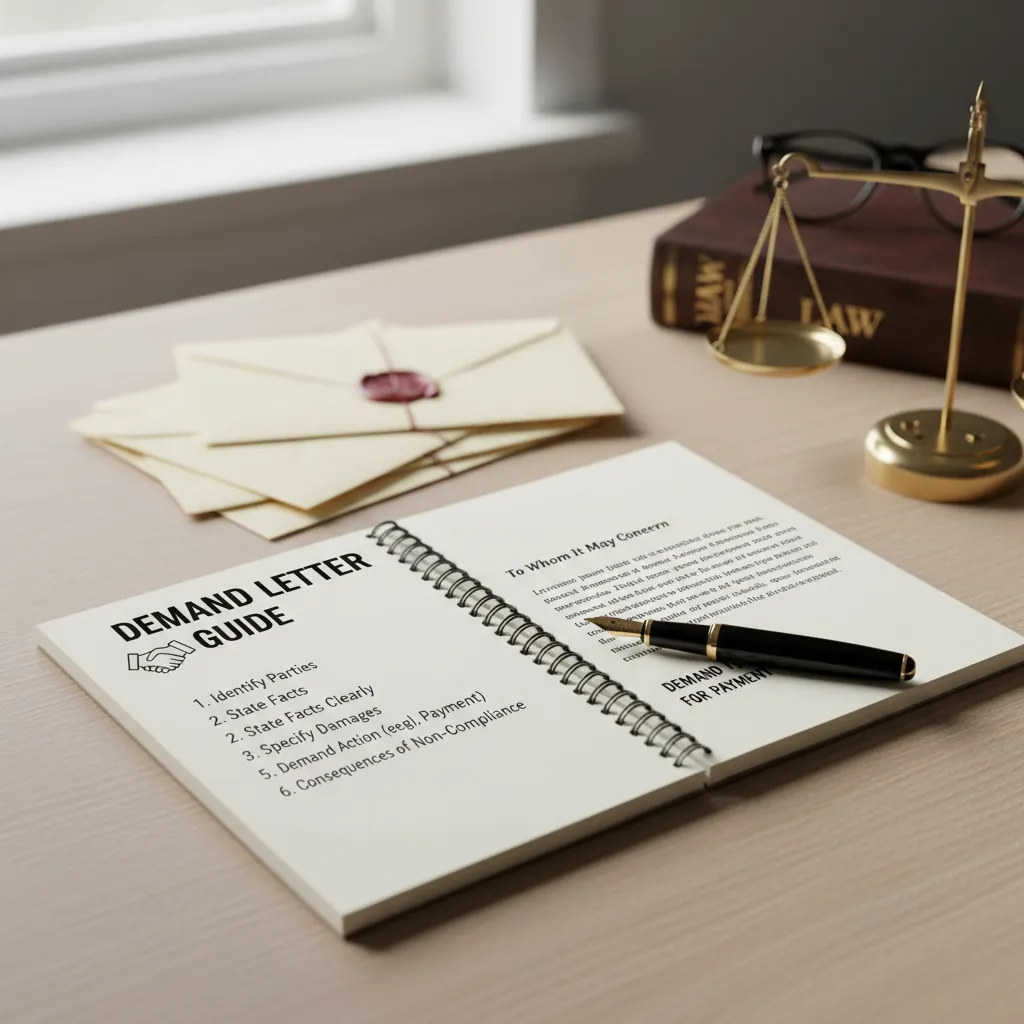
1. State the facts clearly
Open with a concise summary of the situation. Who are you? Who are they? What happened? When did it happen? Stick to facts, not feelings.
Weak: "You completely ruined my apartment and I'm furious about what you did to me."
Strong: "On January 15, 2026, I vacated the rental unit at 123 Oak Street, having provided 30 days' written notice. My security deposit of $1,800 has not been returned as of February 21, 2026, which exceeds the 21-day return period required by state law."
2. Specify exactly what you want
Be precise about the outcome you're seeking. Don't say "I want what's fair." Say "I demand the return of my $1,800 security deposit within 14 days of this letter."
3. Reference the law (when applicable)
You don't need to write a legal brief, but citing the specific statute or regulation that supports your claim adds significant weight. It tells the recipient that you know the law and you know they're on the wrong side of it.
4. Set a reasonable deadline
Give the recipient 7 to 14 days to respond. This is standard and shows you're being reasonable while also creating urgency.
5. State what happens next
Be clear about your next steps if the demand isn't met. This might include filing in small claims court, reporting to a regulatory agency, or pursuing other legal remedies. Keep it factual, not threatening.
6. Keep it professional
No insults. No ALL CAPS. No exclamation points. The more professional your letter, the more seriously it will be taken. Think of it as a business communication, not a venting session.
The Anatomy of a Great Demand Letter
Here's the structure that works:
Header: Your name, address, date, and the recipient's name and address.
Opening paragraph: Brief statement of who you are and why you're writing.
Facts section: A chronological, factual account of what happened. Include dates, amounts, and any relevant documentation.
Legal basis: The laws, regulations, or contract terms that support your claim.
Demand: Exactly what you want (money, action, remedy) and the deadline.
Consequences: What you'll do if the demand isn't met, stated calmly and factually.
Closing: Professional sign-off with your contact information.
When Do You Need a Demand Letter?
Demand letters are useful in a wide range of situations:
- Security deposit disputes with landlords
- Unpaid wages from employers
- Unpaid invoices from clients or customers
- Property damage from neighbors, contractors, or businesses
- Breach of contract for any agreement that wasn't honored
- Insurance claim denials when your legitimate claim was rejected
- Debt disputes when you're being charged for something you don't owe
- Product or service failures when a company won't make things right
If someone owes you money or has an obligation they're not meeting, a demand letter is almost always the right first step.
DIY vs. Attorney vs. Online Tools
You have three main options for creating a demand letter:
Write it yourself
You can absolutely write your own demand letter. The risk is getting the tone, structure, or legal references wrong, which can undermine your credibility. A letter that looks amateurish may not be taken seriously.
Hire an attorney
An attorney will write an excellent demand letter, but it'll cost you. Expect to pay $500 to $2,500 or more depending on the complexity. For a $1,500 dispute, hiring a lawyer often doesn't make financial sense.
Use an online demand letter generator
This is the sweet spot for most people. Platforms like howtowritea.com let you create a professional, legally structured demand letter by answering a few simple questions. The platform handles the formatting, legal language, and even sends it via USPS Certified Mail. Prices range from $9 to $29, making it accessible for disputes of any size.
Over 50 letter types are available, covering everything from security deposits to insurance denials to unpaid wages. You don't need to know the law. You just need to know your situation.
Common Mistakes to Avoid
Being too emotional
Your letter should read like a legal document, not a diary entry. Save your frustration for your friends. Keep the letter factual and professional.
Being too vague
"You owe me money and you know it" is not a demand letter. Specify the amount, the reason, and the deadline. Details are what make a letter enforceable.
Making empty threats
Don't threaten to sue if you have no intention of following through. Only state consequences you're actually prepared to pursue. Credibility is everything.
Waiting too long
Most legal claims have statutes of limitations. The longer you wait, the weaker your position. If someone owes you money, send the letter now, not next month.
Forgetting to send it properly
A demand letter sent by regular mail, email, or text doesn't carry the same weight. Always use USPS Certified Mail with return receipt requested. This proves delivery and shows you mean business.
What Happens After You Send It
Most of the time, one of three things happens:
- They pay up. The letter does its job and the dispute is resolved. This happens more often than you'd think.
- They negotiate. The recipient may respond with a counteroffer. This is actually a good sign. It means they're taking you seriously.
- They ignore it. If they don't respond by the deadline, you have documentation showing you tried to resolve things, and you're ready for the next step, whether that's small claims court, a regulatory complaint, or another legal remedy.
In all three scenarios, you're better off than you were before sending the letter.
The Bottom Line
A demand letter is the single most cost-effective tool for resolving disputes. It's cheaper than a lawyer, faster than court, and more effective than doing nothing.
If someone owes you money or isn't holding up their end of a deal, don't wait. Write a demand letter. Send it certified. And if you want to make sure it's done right, howtowritea.com makes the entire process simple, fast, and affordable.
You don't need a law degree to stand up for yourself. You just need the right letter.