
The $432 Cup of Coffee: How Marcus Got His Bank Overdraft Fees Refunded
The $432 Cup of Coffee: How Marcus Got His Bank Overdraft Fees Refunded
Marcus was having a rough Tuesday. It started with a $4.50 latte on his way to work. He didn't think twice about it—until he checked his banking app at lunch.
There, in bright red numbers, was a balance of -$427.50.
Marcus stared at his phone in disbelief. He knew he was low on cash, but he thought he had at least $20 in the account. As he scrolled through his transaction history, the nightmare became clear. A small Netflix subscription had hit at 3:00 AM, putting him exactly $1.50 over his limit. Then, the bank's "automated system" went to work.
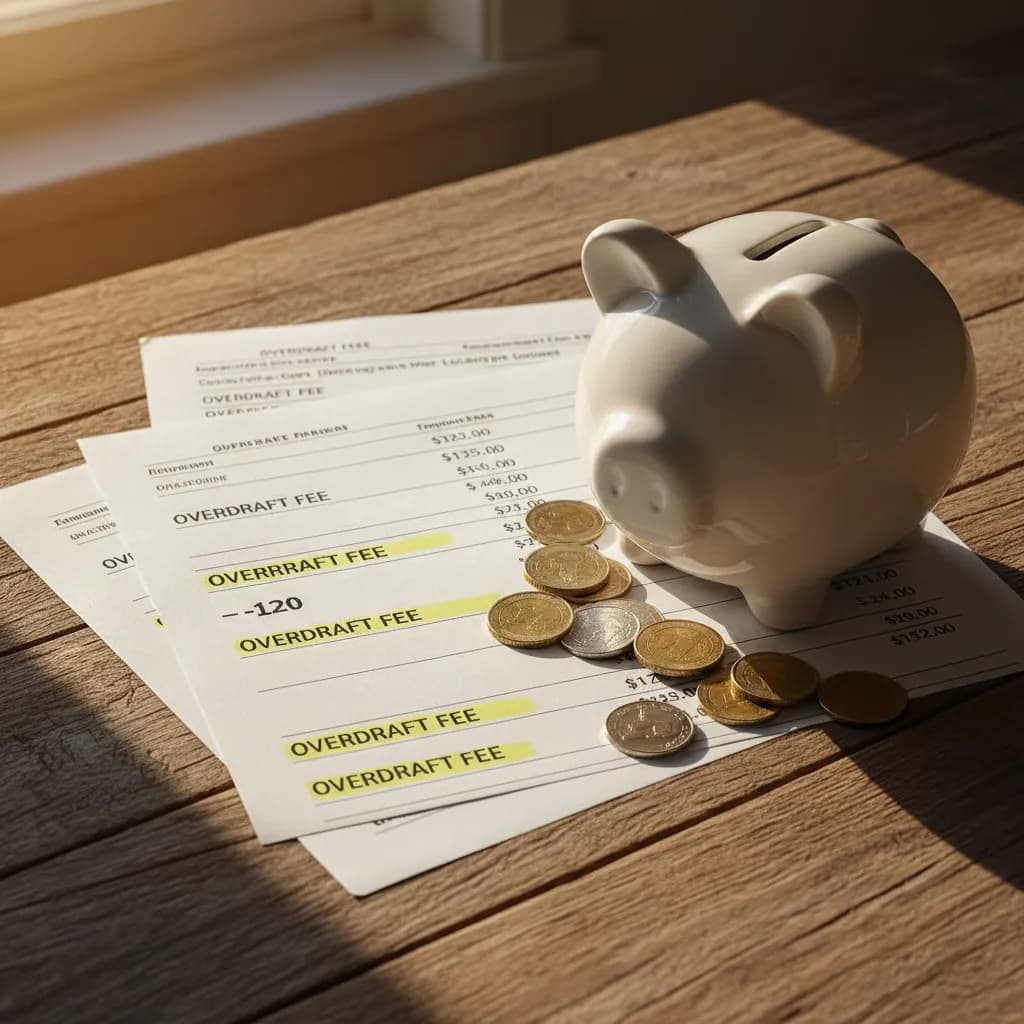
Because he was overdrawn by $1.50, every single transaction he made that morning—the $2.00 bridge toll, the $4.50 coffee, the $12.00 parking garage—triggered a $35 "Insufficent Funds" fee. By 10:00 AM, Marcus had racked up $432 in fees for less than $20 worth of actual spending.
"It felt like I was being robbed by my own bank," Marcus said. "I'm a teacher. $430 is a huge chunk of my rent. I couldn't just let it go."
The First Attempt: The "Polite" Phone Call
Marcus did what most of us do. He called the customer service number on the back of his card. He waited on hold for 45 minutes, finally reached a representative, and explained the situation.
"I've been a customer for five years," Marcus told them. "This was a tiny mistake. Can you please just waive these fees as a one-time courtesy?"
The representative was polite but firm. "I'm sorry, Mr. Miller. Our system shows these charges were valid. I can offer to waive one of the $35 fees, but the rest must stand."
Marcus hung up, feeling defeated. One fee down, eleven to go. He was still out nearly $400.
The Turning Point: Knowing the Rules
That evening, Marcus did some digging. He learned that while banks are allowed to charge overdraft fees, there are strict rules about how they do it. Many banks use a tactic called "reordering transactions," where they process the largest charges first to drain your account faster and trigger more fees on the smaller items.
He also found out about the Electronic Fund Transfer Act and various consumer protection regulations that require banks to be transparent about their overdraft "opt-in" policies.
Marcus realized that his bank hadn't just made a "mistake"—they were using predatory practices. He also realized that a phone call to a low-level call center worker wasn't going to fix it. He needed to talk to someone who actually had the authority to move money.
The Strategy: The Formal Demand Letter
Instead of calling again, Marcus decided to put it in writing. He wanted a paper trail that showed he was a serious consumer who knew his rights.
He used howtowritea.com to draft a professional demand letter. The letter didn't just ask for the money back; it cited the bank's own customer agreement and mentioned that Marcus was prepared to escalate the matter to the Consumer Financial Protection Bureau (CFPB) if the fees weren't refunded.
"The letter was key," Marcus said. "It changed the tone from 'please help me' to 'this is what you owe me.' It cost me about $20, but I figured that was a small price to pay to get $400 back."
The Result: The "Magic" Refund
Marcus sent the letter via Certified Mail. Three days after the tracking showed it was delivered, Marcus got a notification on his phone.
He opened his app. The red numbers were gone. In their place was a single deposit labeled: "COURTESY CREDIT - FULL FEE REVERSAL." The bank hadn't just waived one fee—they had refunded all $432.
No more phone calls. No more arguing. Just a professional letter that got the job done.
How You Can Do the Same
If you're staring at a list of "NSF" fees or "Overdraft Charges" that feel unfair, don't just give up after one phone call. Banks count on you getting frustrated and walking away. That's how they make billions of dollars a year in fee revenue.
Follow Marcus's lead:
- Don't wait. The longer the fees sit there, the harder they are to reverse.
- Collect your "receipts." Take screenshots of your transaction history showing the order in which the fees hit.
- Skip the call center. If the first person says no, don't bother arguing. Move to a formal, written demand.
- Use a professional tool. A letter from howtowritea.com carries weight because it uses the right legal language and shows you're ready to escalate.
Marcus's $432 coffee was a expensive lesson, but it taught him that you don't need a lawyer to stand up to a big bank. You just need to know your rights and be willing to put them on paper.
Your bank account belongs to you, not the bank's fee-generating algorithm. Go get your money back.