
The Viral Lie: How Sarah Stopped a Defamation Campaign Before It Ruined Her
The Viral Lie: How Sarah Stopped a Defamation Campaign Before It Ruined Her
Sarah spent six years building "The Flourish Studio," a boutique floral design shop. She had a five-star rating on Google, a loyal following on Instagram, and a reputation for being the best wedding florist in the county.
Then came the Tuesday morning from hell.
Sarah woke up to twenty missed calls and a flurry of notifications. A former employee, who had been fired two weeks prior for theft, had posted a "tell-all" on a local community Facebook group. The post claimed that Sarah used "moldy flowers," "stole deposits from brides," and "laundered money through the shop."
The post had 400 shares by 9:00 AM. By noon, Sarah had three brides call to cancel their orders.
"I was shaking," Sarah said. "It wasn't just a mean comment. It was a calculated attempt to burn my life's work to the ground. And the worst part was that people were believing it."
The First Instinct: The "Comment War"
Sarah's first reaction was to defend herself. She logged on and started replying to the comments, explaining that the claims were false and that the employee was disgruntled.
It was a mistake.
The "comment war" only made the post more popular in the Facebook algorithm. The more Sarah argued, the more people saw the post. The former employee doubled down, fabricating even more wild stories.
"I realized I was fighting a fire with a squirt gun," Sarah said. "I needed to stop being an 'angry business owner' and start being a 'legal threat.'"
The Strategy: The Cease and Desist Letter
Sarah called a lawyer she knew. He told her that a full defamation lawsuit could cost $15,000 to $50,000 and take two years to resolve. Sarah didn't have two years. She needed the post gone now.
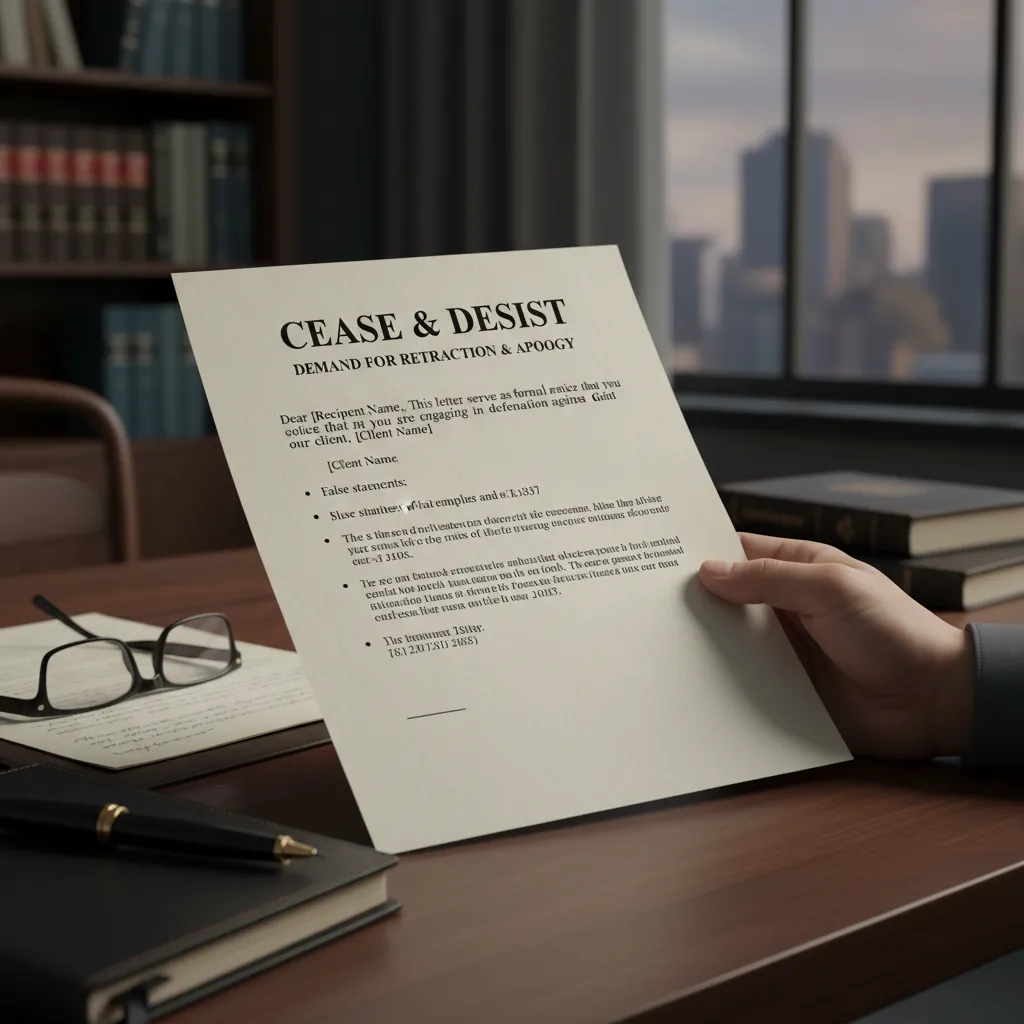
The lawyer suggested a "Cease and Desist" letter. It's a formal legal notice that puts the person on notice that they are committing "defamation per se"—making false statements that damage a person's professional reputation.
Sarah didn't want to spend $500 on a lawyer just for a letter, so she used howtowritea.com. She entered the facts: the false statements, the evidence of their falsity (like her clean health inspection reports), and the specific damage being done to her business.
The system generated a professional, firm demand letter. It didn't just ask the person to stop; it demanded they:
- Immediately delete the post.
- Issue a public retraction.
- Preserve all evidence for a potential future lawsuit.
The Delivery: Real Consequences
Sarah sent the letter via Certified Mail. She also sent a PDF copy to the former employee via email.
"The shift was instant," Sarah said. "When she saw the formal letter—citing the specific state laws on defamation and mentioning the possibility of 'punitive damages'—she realized this wasn't just a Facebook fight anymore. It was a legal liability."
Four hours after the email was sent, the Facebook post was gone. A day later, the former employee posted a brief apology, stating they had "misunderstood the situation" and were "retracting their previous statements."
The Lesson: Documentation Over Discussion
Sarah's business survived, but it was a close call. She learned that when someone is lying about you online, your words don't matter—the law's words do.
If you find yourself the target of a defamation campaign, follow Sarah's playbook:
- Don't Argue Online. It only feeds the trolls and boosts the post.
- Screenshots are Everything. Before anything is deleted, take screenshots of the post, the shares, and the comments. You'll need these to prove "damages."
- Draft a Formal Demand. A "please stop" text won't work. A professional cease and desist letter from howtowritea.com shows you are ready to escalate.
- Certified Mail is Your Friend. The "green card" signature is proof that they can no longer claim they didn't know the statements were false.
Protecting Your Reputation
In the age of social media, a single lie can spread faster than the truth ever will. You don't have to wait for the "internet to move on." Your reputation is an asset, and you have the legal right to protect it.
If someone is spreading lies about your character or your business, don't just sit there and take it. Use howtowritea.com to draw the line. Send the letter. Stop the lie. Save your business.
Sarah did, and it was the best $20 she ever spent.