
The Surgery and the Pink Slip: An FMLA Interference Story
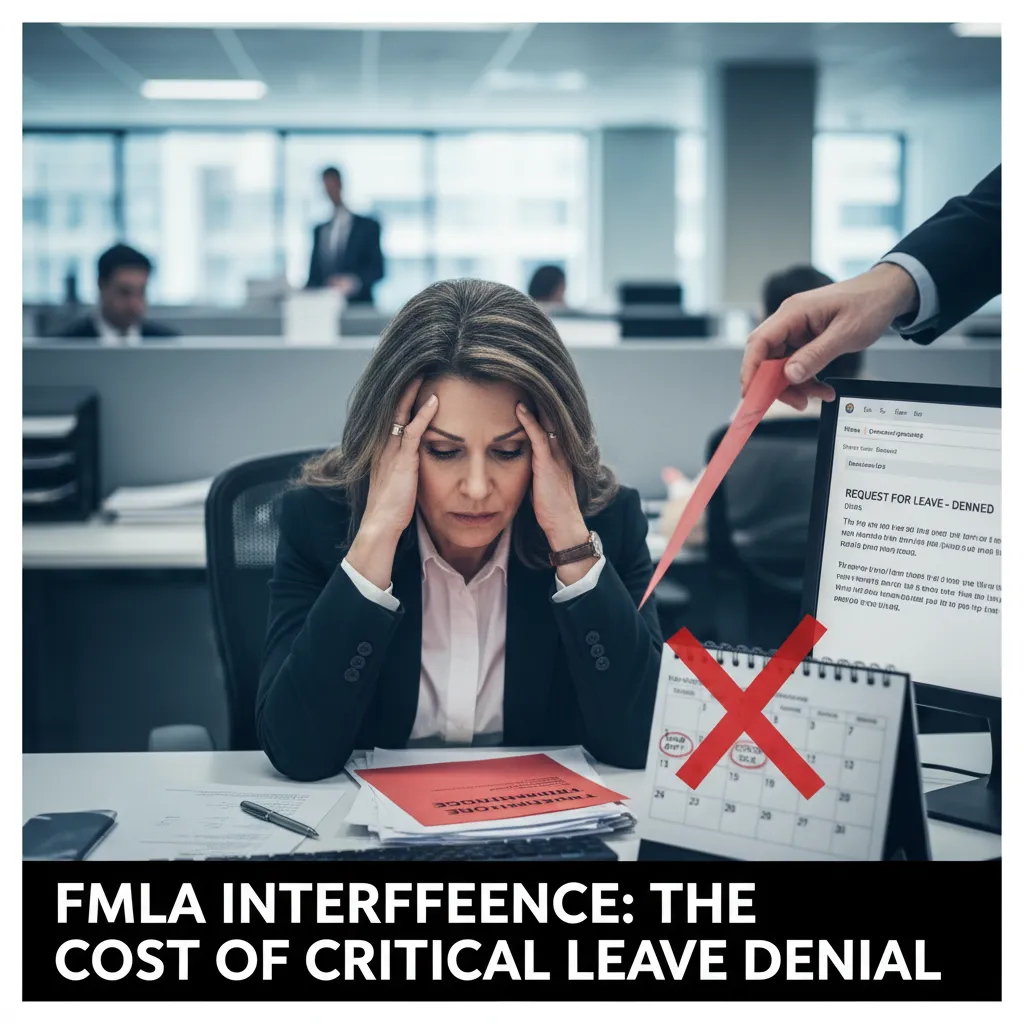
The Surgery and the Pink Slip: An FMLA Interference Story
Sarah had worked as a Senior Analyst at a mid-sized marketing firm for four years. She was a 'top performer'—the kind of employee who answered emails at 9:00 PM and never missed a deadline.
In January, Sarah found out she needed major abdominal surgery. Her doctor told her she'd need six weeks of recovery time. Sarah did everything right: she notified HR three months in advance, she filled out all the FMLA (Family and Medical Leave Act) paperwork, and she spent her final week in the office creating a 40-page transition guide for her team.
But three weeks into her recovery, while she was still on pain medication and barely able to walk to the mailbox, her phone buzzed. It was an email from her manager.
"Hey Sarah, hope you're feeling better. We're having some trouble with the Miller account. Can you jump on a quick Zoom call tomorrow morning to walk us through the Q4 data?"
Sarah politely replied that she was still recovering and wasn't cleared to work. Two days later, a second email arrived: "It's really disappointing that you aren't willing to help the team in a pinch. We're going to have to 're-evaluate' the structure of your department."
When Sarah returned to work three weeks later, her desk had been moved to a corner near the breakroom. Her major accounts had been permanently reassigned. A week later, she was fired for 'restructuring reasons.'
What is FMLA Interference?
Many employees think FMLA only protects you from being fired while you are on leave. That's a myth. The law is much broader.
FMLA Interference occurs when an employer does anything to discourage, restrain, or deny you from exercising your rights. In Sarah's case, there were three clear violations:
- Working on Leave: Asking an employee to perform work (even 'just a quick Zoom call') while they are on FMLA leave is interference.
- Discouragement: Hinting that taking leave will hurt your career or 'let the team down' is a violation.
- Retaliation: Changing your job duties, moving your desk, or firing you because you used your legal leave is highly illegal.
Sarah's Path to Justice
Sarah was devastated, but she was also angry. She knew her 'restructuring' was a lie—they had hired a new analyst to take her accounts the day after she was fired.
She considered hiring a high-priced employment lawyer, but they wanted a $5,000 retainer just to look at her case. Instead, Sarah decided to start by documenting the truth.
Step 1: The Paper Trail
Sarah saved every email. She had the Zoom request, the 'disappointment' email, and her original FMLA approval. She also had her performance reviews from the last four years showing she was an 'Exceptional' employee until the moment she got sick.
Step 2: The Formal Demand Letter
Sarah didn't just want to 'complain' to HR. She wanted them to know she was prepared to file a complaint with the Department of Labor (DOL) or a lawsuit in federal court.
She used howtowritea.com to draft a formal demand letter. The letter was calm, professional, and cited the specific federal regulations regarding FMLA interference and retaliation. It outlined the timeline of her leave, the illegal requests to work, and the suspicious timing of her termination.
She demanded a severance package equivalent to six months of pay, plus a positive professional reference, in exchange for not pursuing a formal DOL investigation.
Step 3: The Response
When the firm's legal department received Sarah's letter via certified mail, the tone changed instantly. They knew that FMLA cases are very difficult for employers to win, especially when there is a clear paper trail of 'work requests' during medical leave.
They didn't want a Department of Labor auditor digging through their files. Within a week, they offered Sarah a four-month severance package and a mutual non-disparagement agreement.
Lessons for Every Employee
If you are planning to take FMLA leave, or if you've been punished for taking it, remember Sarah's story:
- FMLA is not a 'favor.' It is a federal right for those who qualify (usually those at companies with 50+ employees who have worked there for a year).
- 'No' is a complete sentence. If your boss asks you to work while you are on medical leave, you should say: "I am currently on FMLA leave and am not authorized to perform work duties. I look forward to catching up when I am medically cleared to return."
- Watch for the 'Cold Shoulder.' If your job changes the moment you get back—different hours, different duties, or a 'bad vibe' from management—start documenting it immediately.
- Don't wait to act. Retaliation often happens in slow motion. The sooner you send a formal demand letter using a tool like howtowritea.com, the more leverage you have.
Sarah eventually found a better job at a company that respected her boundaries. She didn't need a $500-an-hour lawyer to get her justice; she just needed her documentation and the courage to send a professional letter.
Your health shouldn't cost you your career. If your employer interfered with your FMLA rights, don't just walk away. Make them pay for the bridge they burned.