
How to Fight an Illegal Rent Increase: A Step-by-Step Guide
How to Fight an Illegal Rent Increase: A Step-by-Step Guide
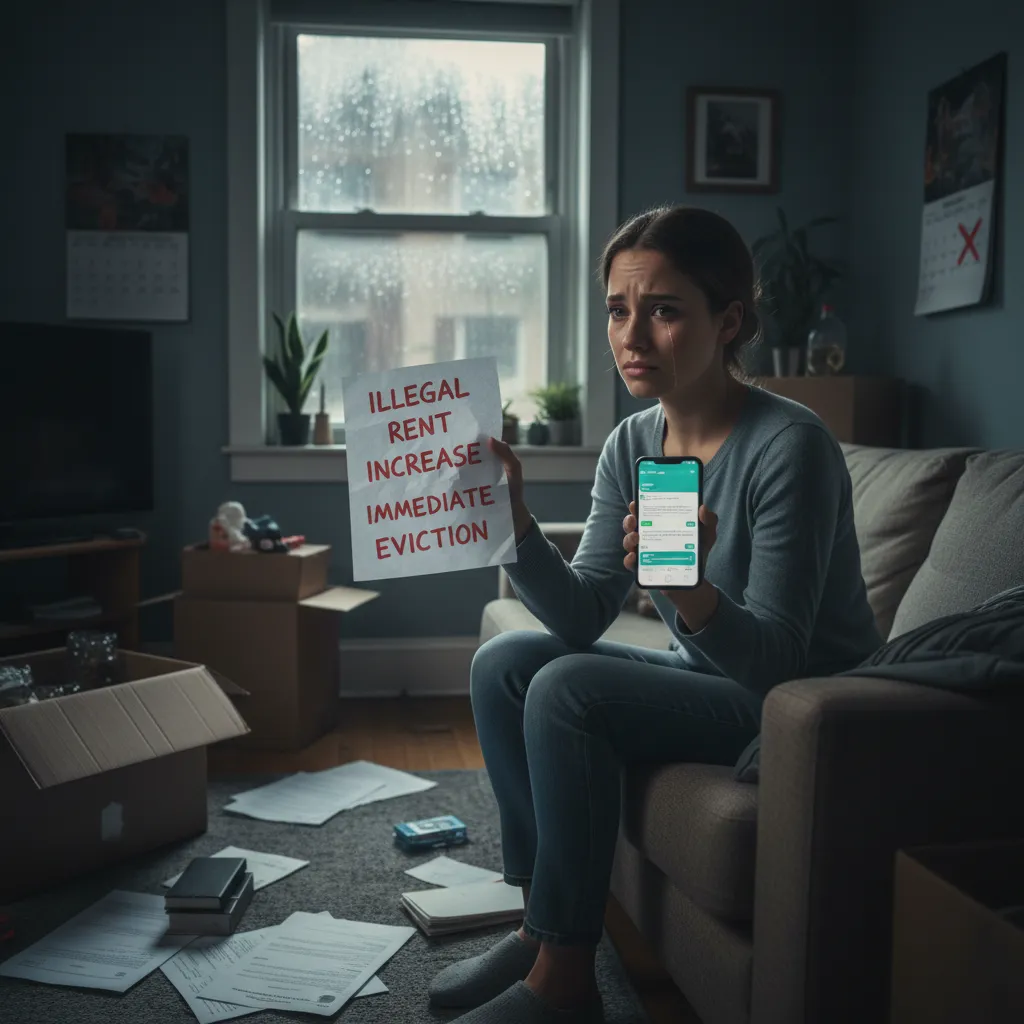
You open your mailbox and see a letter from your landlord. You're expecting a lease renewal, but instead, you find a 'Notice of Rent Adjustment.' Your rent is going up by 25%—starting next month.
Your heart sinks. That's an extra $400 a month you don't have. You love your apartment, but this feels wrong. Is it even legal?
In many cases, the answer is no. Whether it's a violation of rent control laws, a breach of your lease agreement, or a failure to provide proper notice, landlords often try to push through illegal increases hoping tenants won't know their rights.
Here is exactly how to identify an illegal rent increase and how to stop it in its tracks.
Step 1: Check Your Lease Agreement
The first rule of renting is that a lease is a binding contract.
If you are in the middle of a fixed-term lease (e.g., a 12-month lease that ends in six months), your landlord cannot raise the rent until that lease expires, unless the lease specifically allows for it (which is very rare).
If you are a month-to-month tenant, they can raise the rent, but they must follow specific notice periods (usually 30 to 60 days).
Step 2: Determine if You are in a Protected Area
Rent control and rent stabilization laws are the most powerful weapons for tenants. These laws cap how much a landlord can increase rent each year.
- State-wide caps: States like California and Oregon have state-wide rent control (e.g., California's AB 1482 caps increases at 5% plus the local inflation rate).
- City-wide laws: Cities like New York, San Francisco, Los Angeles, and Washington D.C. have very strict rent stabilization boards.
- Corporate vs. Private: In some areas, rent control only applies to buildings owned by corporations or buildings that are older than 15 years.
Do a quick search for "[Your City] rent control laws" or check your local tenant union website to see if your building is protected.
Step 3: Verify the Notice Period
Even if an increase is legal in amount, it might be illegal in its timing.
Almost every state requires a written notice period. For an increase of less than 10%, most states require 30 days' notice. For increases larger than 10%, many states (like California) require 90 days' notice.
If your landlord texts you on the 28th saying "Rent is up $100 starting the 1st," that is an illegal notice. You do not have to pay the increased amount until the proper notice period has passed.
Step 4: Identify Retaliatory or Discriminatory Increases
A rent increase is illegal if it is used as a weapon.
- Retaliation: If you recently complained to the city about mold, or if you joined a tenant union, and your landlord suddenly raises your rent (and only yours), that is likely illegal retaliation.
- Discrimination: If the landlord raises rent for families with children but not for single tenants, or for tenants of a certain race or religion, that is a violation of the Fair Housing Act.
Step 5: Send a Formal Demand Letter
If you believe the increase is illegal, don't just stop paying rent. That could lead to eviction. Instead, you need to 'contest' the increase in writing.
A professional demand letter should:
- State that you have received the notice of increase.
- Clearly explain why the increase is illegal (cite the specific lease clause or state/local statute).
- State that you will continue to pay your current, legal rent amount until a valid notice is provided.
- Request a corrected lease renewal or notice.
Writing this letter is the most important step in protecting your housing. Using a tool like howtowritea.com ensures your letter is professional and cites the correct legal authorities. It shows the landlord that you aren't an easy target and that you're prepared to take the matter to a rent board or court.
Step 6: Pay the Correct Amount
Once you have sent your demand letter (via Certified Mail!), continue to pay your old rent amount. When you send the check, write 'Rent for [Month] - Payment in Full' on the memo line.
If the landlord refuses the check, put the money into a separate savings account (an 'escrow' account) so you can prove to a judge later that you had the money and were willing to pay.
Summary Checklist
- Is your lease still active? If yes, the increase is likely illegal.
- Is there a rent cap in your city? Check the percentage.
- Was the notice in writing and on time? 30-90 days is the standard.
- Send the letter. Use howtowritea.com to make it official.
Your home should be your sanctuary, not a source of constant financial fear. Landlords often 'test' tenants with large increases to see who will pay without questioning. Be the tenant who knows the law. Send the letter, stand your ground, and keep your rent fair.