
Breaking a Lease Due to Domestic Violence: Chloe's Story
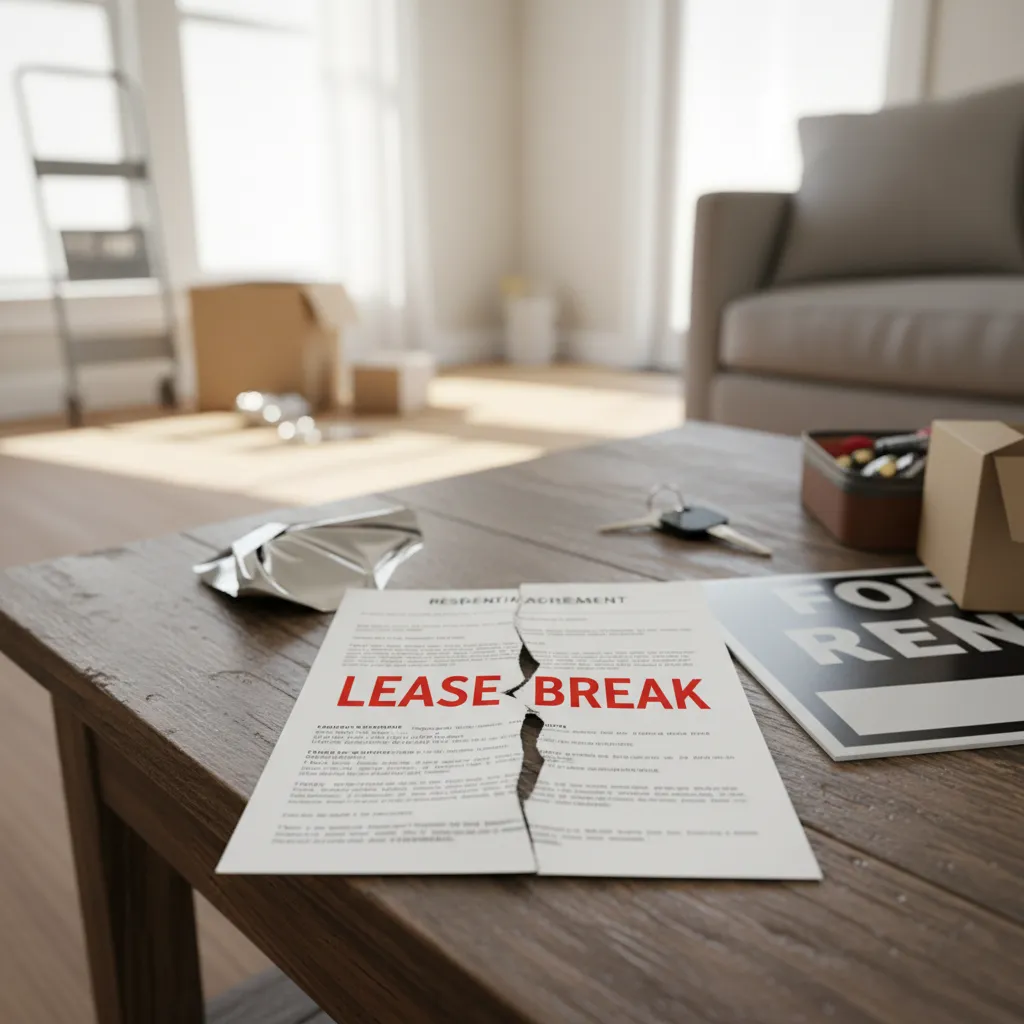
Breaking a Lease Due to Domestic Violence: Chloe's Story
Chloe's home was no longer her sanctuary. After an escalating incident with her ex-partner, she knew she couldn't stay in her apartment. The locks were changed, and she had a temporary restraining order, but the building was too accessible, and the memories were too heavy. She needed to leave—immediately.
But when Chloe looked at her lease, she felt trapped all over again. She had eight months left on her contract. According to the 'Early Termination' clause, she'd owe two months' rent as a penalty, plus she'd lose her $1,500 security deposit. Altogether, it was nearly $5,000 she didn't have.
"I can't afford to be safe," she told her sister.
If you are in Chloe's position, or if you are helping someone who is, you need to know that the law provides a way out. You do not have to choose between your safety and your financial future.
The Law is on Your Side
In most states (including California, Texas, New York, and Florida), there are specific laws that allow survivors of domestic violence, sexual assault, or stalking to terminate a residential lease early without penalty.
These laws recognize that a lease is a contract, but your physical safety is a fundamental right that overrides that contract.
Chloe's First Obstacle: The Uninformed Landlord
Chloe emailed her property manager, explaining the situation and asking to move out by the end of the month.
The response was cold: "We're sorry to hear about your situation, Chloe, but the lease is a binding document. If you move out early, you will be responsible for the rent until we find a new tenant, plus the termination fee."
The property manager wasn't necessarily a bad person; they just didn't know the law. Many landlords assume their 'standard lease' is the final word on the matter. It isn't.
The Path to Freedom: Documentation and Notice
Chloe realized she needed to move from 'asking' to 'notifying.' She didn't need the landlord's permission to break the lease; she needed to exercise her legal right to do so.
Step 1: Gathering the Proof
To break a lease for DV reasons, most states require one of the following:
- A copy of a protective or restraining order.
- A police report documenting the incident.
- A signed statement from a qualified professional (like a doctor, therapist, or domestic violence counselor).
Chloe had her temporary restraining order and the police report from the night of the incident.
Step 2: The Formal Notice Letter
Chloe knew she couldn't just leave a voicemail. She needed a formal, written notice that cited the specific state statute.
She used howtowritea.com to draft a professional 'Notice of Intent to Terminate Lease Due to Domestic Violence.' The tool helped her:
- Cite the exact state law that protected her.
- State her move-out date (usually 30 days' notice is required, though some states allow for immediate termination).
- Demand the return of her security deposit, as DV-related moves cannot be a reason to withhold a deposit.
- Keep the details of the incident private (the law generally only requires the fact of the documentation, not the gritty details).
Chloe sent the letter via USPS Certified Mail. This was her 'shield.' If the landlord tried to sue her later or report her to a credit bureau for 'unpaid rent,' this letter would be her proof that the lease was legally terminated.
The Result: A Clean Break
Once the property manager received the formal letter—which looked like it had been drafted by a law firm—their tone changed completely.
"We've reviewed the statutes you cited," the manager emailed. "We will waive the termination fee. Please return your keys by the 30th. Your security deposit will be processed as per the normal move-out procedure."
Chloe was able to move into a new, secure building closer to her family. She didn't owe a dime in penalties, and she got her full deposit back three weeks later.
Lessons for Survivors
If you are facing a dangerous situation at home, don't let a lease keep you there. Keep these points in mind:
- Safety first. If you are in immediate danger, leave. You can handle the paperwork from a safe location.
- You don't need a lawyer. You can exercise these rights yourself. A professional notice from howtowritea.com often carries the same weight as an attorney's letter for a fraction of the cost.
- Privacy is protected. In many states, it is illegal for a landlord to share the information in your DV notice with anyone else, including the abuser.
- Act quickly. Most states require you to send the notice within a certain timeframe (e.g., within 60 to 90 days) of the incident or the protective order being issued.
You deserve a home where you feel safe. The law has built a 'fire escape' into your lease—you just have to be the one to open the door. Send your notice, take your deposit, and start your next chapter.