
Online Defamation: Ignoring the Troll vs. Sending a Cease and Desist
Online Defamation: Ignoring the Troll vs. Sending a Cease and Desist
It starts with a notification. A one-star review on Google. A nasty post on a local Facebook group. A tweet that makes a completely false and damaging accusation about your business or your personal character.
Your first reaction is a mix of anger and panic. You want to reply. You want to defend yourself. You want to scream into the digital void that what they're saying is a lie.
But how should you actually handle it? In the world of online defamation, there are two primary schools of thought: the 'Ignore It' approach and the 'Legal Action' approach. Let's look at how they compare.
Option 1: The 'Ignore It' Strategy (The 'Don't Feed the Troll' Method)
This is the advice most people give: "If you ignore them, they'll go away."
- The Pros: It costs $0. It avoids the 'Streisand Effect' (where trying to hide or remove something only brings more attention to it). Sometimes, replying only validates the person's anger and encourages them to post more.
- The Cons: The lies stay online forever. If someone Googles your name or your business, that defamatory post might be the first thing they see. Silence can sometimes look like an admission of guilt to an outsider.
- Best For: A one-time comment from a random person with no followers who isn't being taken seriously by anyone else.
Option 2: The 'Legal Action' Strategy (The 'Cease and Desist' Method)
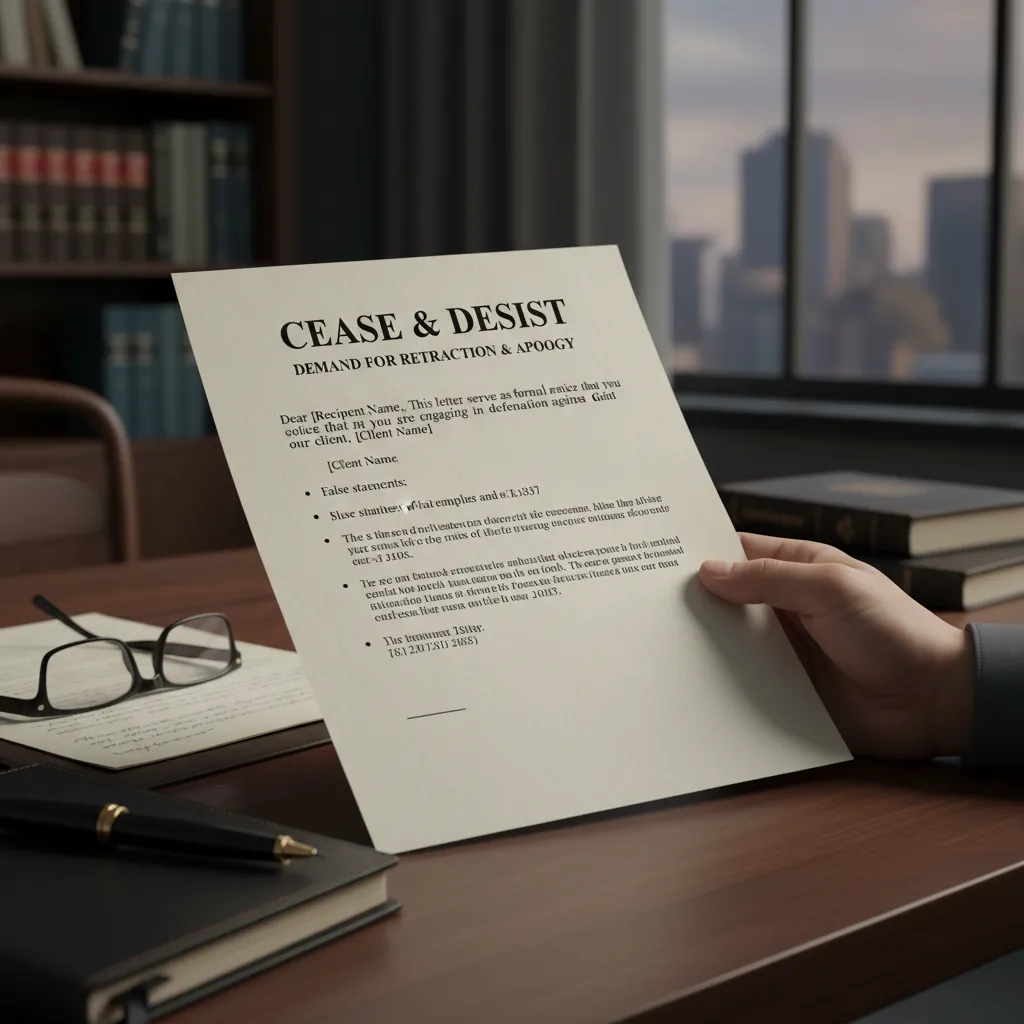
This is the formal route. You send a letter stating that their comments are defamatory and demanding they be removed immediately.
- The Pros: It shows the person that you are serious and that their actions have real-world legal consequences. It creates a paper trail if you eventually need to file a lawsuit. In many cases, a formal letter is enough to scare a 'keyboard warrior' into deleting the post within minutes.
- The Cons: If you hire a lawyer to write the letter, it can cost $500 to $1,500. There is also a small risk that the person will post the letter itself to try and mock you (though this often backfires on them legally).
- Best For: When the person is a former employee, a competitor, or someone whose lies are causing actual financial harm (like lost customers or a damaged professional reputation).
Option 3: The Automated Demand (The Middle Ground)
This is where you use a tool like howtowritea.com to generate a professional-looking Cease and Desist letter.
- The Cost: $9 - $29.
- The Pros: You get the weight of a legal document without the $1,000 price tag. The letter cites specific defamation laws and explains the 'elements of libel' to the offender. It looks and feels like it came from a legal department, which is usually all the leverage you need to get a post taken down.
- The Cons: It's not a lawsuit. If the person is truly unhinged and doesn't care about the law, a letter alone might not stop them (though it's still a required first step for most court cases).
- Success Rate: Surprisingly high. Most people are brave behind a screen until they receive a formal document in their physical mailbox or inbox.
What Qualifies as Defamation?
Before you send a letter, you need to make sure you actually have a case. To be defamation, the statement must be:
- False: If they say you are a 'jerk,' that's an opinion (legal). If they say you 'stole $500 from the register,' and you didn't, that's a false statement of fact (illegal).
- Published: It was told to a third party (posted online, emailed to a boss, etc.).
- Harmful: It caused damage to your reputation or finances.
Comparing the Costs: A Real-World Example
Imagine a former business partner is posting on LinkedIn that you 'falsified your credentials.'
| Path | Total Cost | Reputation Impact |
|---|---|---|
| Ignore It | $0 | High risk of lost job offers or clients. |
| Lawyer Letter | $750+ | Professional but very expensive. |
| howtowritea.com | $29 | Professional, fast, and cost-effective. |
The Power of the 'First Strike'
In the digital age, a reputation takes years to build and seconds to destroy. While 'ignoring the trolls' is good advice for minor annoyances, serious accusations require a serious response.
A professional Cease and Desist letter is the 'First Strike.' It puts a boundary in place. It tells the other person that the internet isn't a lawless zone where they can lie without consequence.
Don't let a lie become your legacy. If someone is defaming you, use a tool like howtowritea.com to draft a formal demand and protect your name.