
The Fire That Wasn't: A Smoke Damage Dispute Story
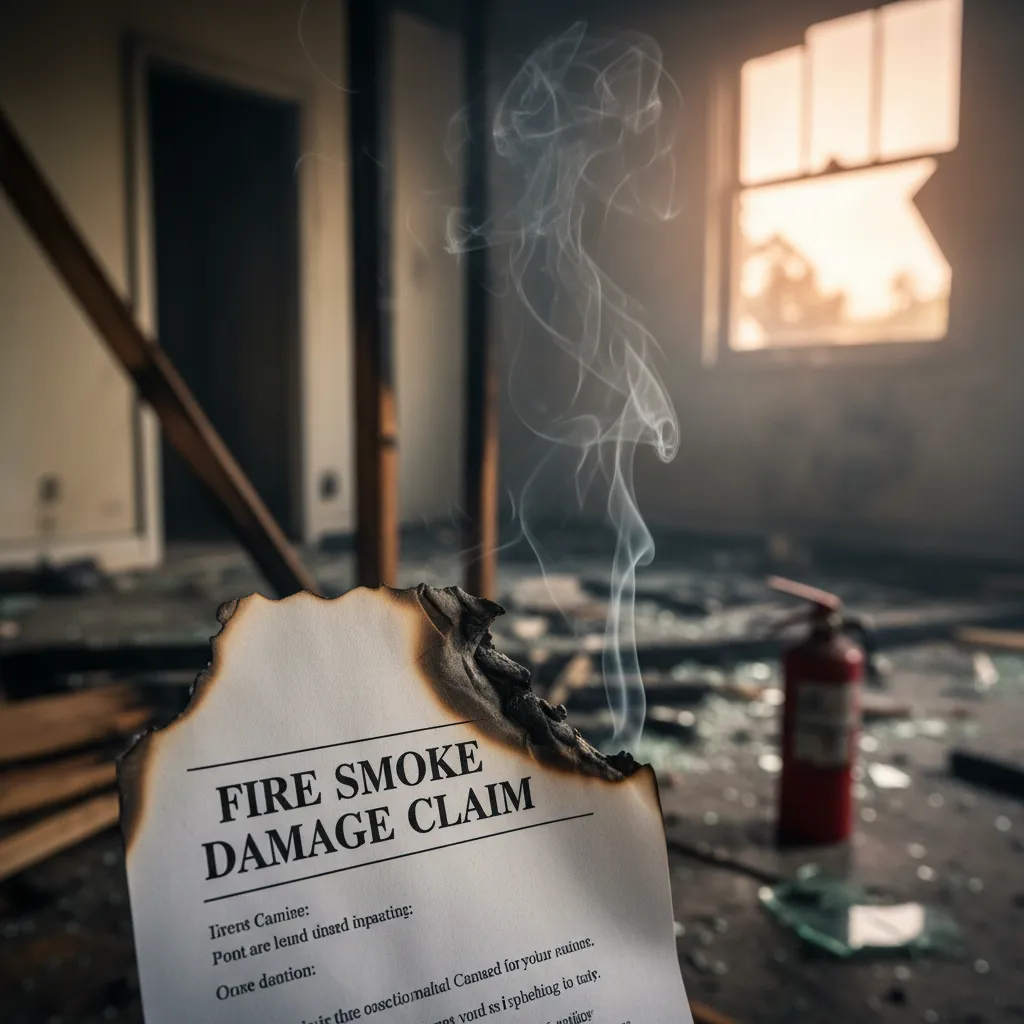
The Fire That Wasn't: A Smoke Damage Dispute Story
Elena didn't have a fire in her home. She didn't even have a singed rug. But she had a problem that was just as devastating: her neighbor's kitchen had exploded in a grease fire, and because they shared a ventilation system in their condo building, Elena's entire home was filled with thick, acrid black smoke for four hours.
By the time the fire department cleared the building, Elena's white sofa was grey. Her curtains smelled like burnt plastic. Every time she turned on her AC, it smelled like a campfire.
"It's just 'nuisance smoke,'" the insurance adjuster told her two days later. "There's no structural damage. We'll pay $500 for a 'deep cleaning' of the carpets, but that's it."
Elena was coughing every night. Her doctor told her the particulates in the smoke were dangerous for her asthma. But her insurance company was treating the incident like she'd just burnt a piece of toast.
If you are dealing with smoke damage without a 'fire,' Elena's story is the blueprint for how to fight a denial.
The Invisible Damage
The biggest hurdle in smoke claims is that smoke is 'invisible' to a camera but 'physical' to a laboratory. Insurance companies rely on the fact that you can't 'see' the damage on a wall to deny the claim.
Elena did her research. She learned that smoke isn't just a smell; it's a layer of microscopic soot, ash, and chemicals (like carbon monoxide and hydrogen cyanide) that settles into porous surfaces.
Step 1: The Independent Inspection
Elena realized the insurance company's adjuster wasn't a scientist. He was a guy with a clipboard whose job was to close cases cheaply.
She spent $400 of her own money to hire an independent 'Industrial Hygienist.' They took 'wipe samples' from her walls, her vents, and inside her closet. The results were clear: her home had 'elevated levels of combustion byproducts' that were significantly higher than what is considered safe for a residential dwelling.
Step 2: The 'Bad Faith' Pivot
When Elena showed the lab results to the adjuster, he still balked. "Our policy only covers 'physical loss.' We don't see this as a physical loss."
Elena knew this was a classic insurance tactic. She decided to stop 'chatting' and start 'demanding.'
She used howtowritea.com to draft a formal demand letter. This wasn't just a request for more money; it was a 'Notice of Intent' to file a bad-faith claim. The letter cited her state's insurance regulations, which defined 'physical loss' to include the deposit of soot and smoke particulates that made the home uninhabitable.
She included the lab report and three quotes from professional smoke remediation companies. The total cost to properly clean the HVAC, seal the walls, and clean the upholstery was $12,000—a far cry from the $500 'deep cleaning' the insurance company offered.
Step 3: The Result
The formal letter, combined with the lab evidence, was the turning point. When the insurance company's legal department saw a letter that cited specific case law regarding 'particulate matter as physical loss,' they realized they couldn't win a lawsuit.
Within 48 hours, they 'revised' their estimate. They agreed to pay for the full $12,000 remediation, plus the $400 Elena spent on the industrial hygienist.
Lessons for Homeowners
If your home smells like smoke but the insurance company says 'no,' remember Elena's journey:
- Smell is evidence. If you can smell smoke, there are physical particulates present. Don't let an adjuster tell you otherwise.
- Adjusters aren't experts. They are generalists. If the damage is subtle (like smoke or mold), you need an expert report to back you up.
- The 'Physical Loss' Myth. Insurance companies love to say there is no 'physical loss' if nothing is burnt. In almost every state, the courts have ruled that soot and smoke are physical damage.
- Use a formal demand. A phone call to your agent is not a legal record. A demand letter from howtowritea.com is. It puts the company on notice that you know your rights and are prepared to defend them.
Elena's condo is now clean, and her asthma has cleared up. She didn't get there by being 'polite'; she got there by being professional and persistent.
Your home is your most important asset, and your health is your most important gift. Don't let an insurance company compromise either one to save a few thousand dollars. Fight the denial with facts and a formal demand.