
Lost Luggage Claims: The Airline's 'Standard' Check vs. Your Full Legal Rights
Lost Luggage Claims: The Airline's 'Standard' Check vs. Your Full Legal Rights
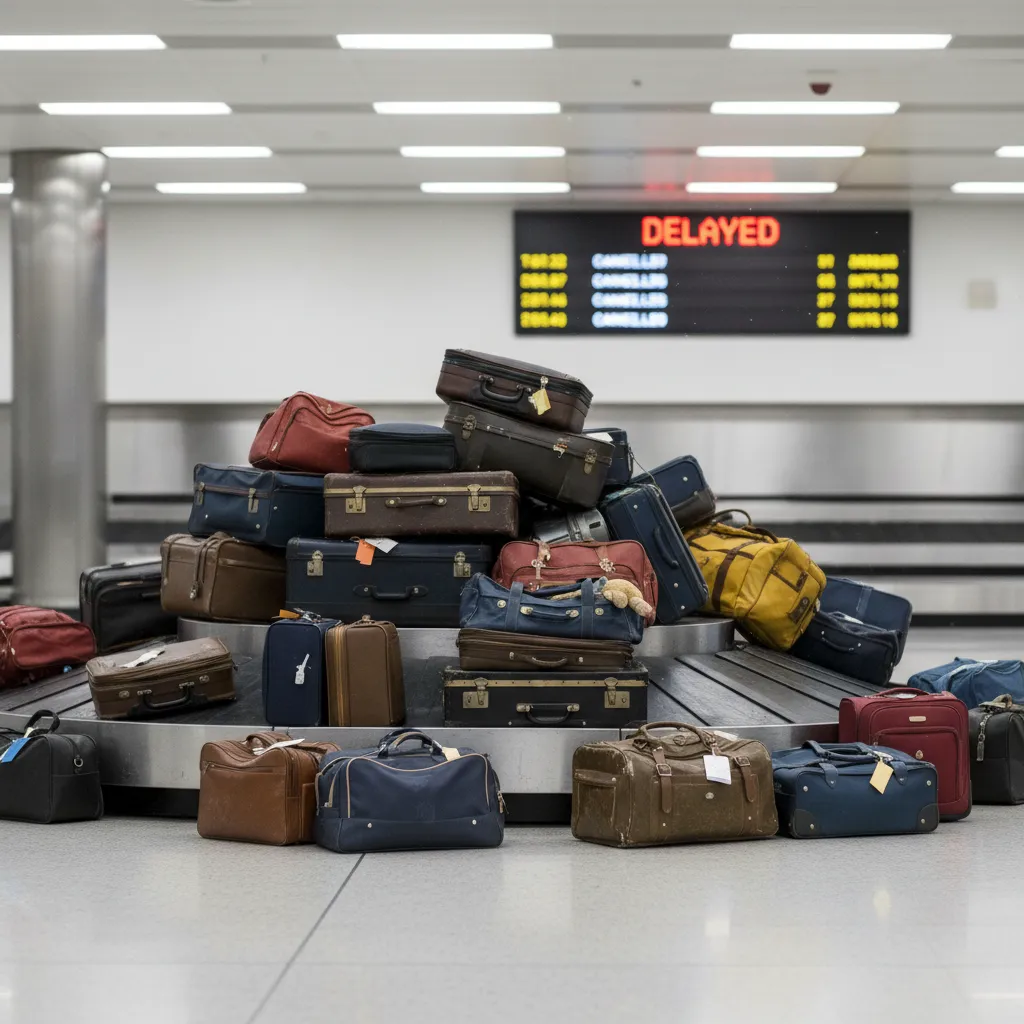
You land in Paris. You're ready for your two-week vacation. You wait at the luggage carousel for forty-five minutes until the belt stops moving. Your bag is nowhere to be found.
You go to the 'Baggage Services' desk. The agent is tired. They give you a toiletries kit with a tiny toothbrush and tell you, "It'll probably be on the next flight. If not, we'll send you a claim form."
Three days later, the bag is still missing. Your $1,200 wardrobe, your $400 professional camera, and your $300 in designer shoes are gone. The airline sends you a 'settlement' check for $500 as a "gesture of goodwill."
Do you take the check?
If you do, you might be leaving thousands of dollars on the table. Here is how to compare the airline's 'default' offer with what you are actually entitled to under the law.
Option 1: The Airline's 'Internal' Claim (The 'Lowball' Path)
Every airline has its own internal rules for lost baggage. They will ask you for receipts for everything in the bag (which most people don't have) and will apply heavy 'depreciation' to your items.
- The Pros: It's relatively fast. They might cut you a small check within a week just to get you to go away.
- The Cons: They will try to cap your payout at an arbitrary number, like $500 or $1,000, regardless of what was in the bag. They will also ignore your 'interim expenses' (the clothes you had to buy while waiting).
- Best For: When you only had $200 worth of old t-shirts and jeans in the bag.
Option 2: The 'DOT/Montreal Convention' Path (The 'Legal' Path)
If you are flying within the U.S., the Department of Transportation (DOT) sets the rules. If you are flying internationally, a treaty called the Montreal Convention applies.
- The Pros: The limits are much higher. For domestic U.S. flights, airlines are liable for up to $3,800 per passenger. For international flights, the limit is approximately $1,700.
- The Cons: Airlines won't tell you about these limits. You have to be the one to cite the regulations and demand the full amount.
- Best For: Most travelers. If your lost items (plus the bag itself) are worth more than $500, you should be using this path.
Option 3: The Formal Demand Letter (The 'Enforcement' Path)
This is using a tool like howtowritea.com to generate a professional demand letter that cites the DOT regulations or the Montreal Convention.
- The Cost: $9 - $29.
- The Pros: It signals to the airline that you know the law. It turns a 'lost bag complaint' into a 'regulatory compliance matter.' Airlines have a separate department for 'legal claims' that has much higher payout authority than the people at the airport desk.
- The Cons: You still have to provide a list of the lost items and their estimated value.
Why 'Interim Expenses' Matter
Most people don't realize that the airline owes you for more than just the bag. If you are in a foreign city and you have to buy a suit for a wedding or a coat for the cold because they lost your bag, the airline must reimburse you.
Keep every single receipt. If the airline says, "We only reimburse 50% for clothing," they are lying. The DOT rules state they must cover all 'reasonable, documented, and non-frivolous' expenses while your bag is delayed.
Comparing the Financials: A Typical Lost Suitcase
| Airline 'Courtesy' Offer | howtowritea.com Demand | |
|---|---|---|
| Bag & Contents | $500 (Capped) | $1,400 (Full Value) |
| New Clothes (Interim) | $0 (Denied) | $350 |
| Baggage Fees Refund | $0 | $60 |
| Final Check | $500 | $1,810 |
By using a professional demand letter to cite your rights, you can often triple the amount of your settlement.
Summary Checklist
- File the PIR. Get a 'Property Irregularity Report' number before you leave the airport. This is your proof of loss.
- Itemize your loss. Write down everything that was in the bag. If you don't have receipts, find the same item online and print the current price.
- Keep your receipts. Every toothbrush, every t-shirt, and every phone charger you bought while waiting is a claimable expense.
- Send a formal demand. Use howtowritea.com to cite the DOT or Montreal Convention rules.
Don't let an airline's negligence ruin your trip and your budget. You paid for a ticket that included the safe transport of your belongings. If they failed to deliver, they owe you the full legal limit, not just a 'gesture of goodwill.' Send your demand letter today and get your vacation fund back.