
The $800 Ghost Charge: A Chargeback Rebuttal Story
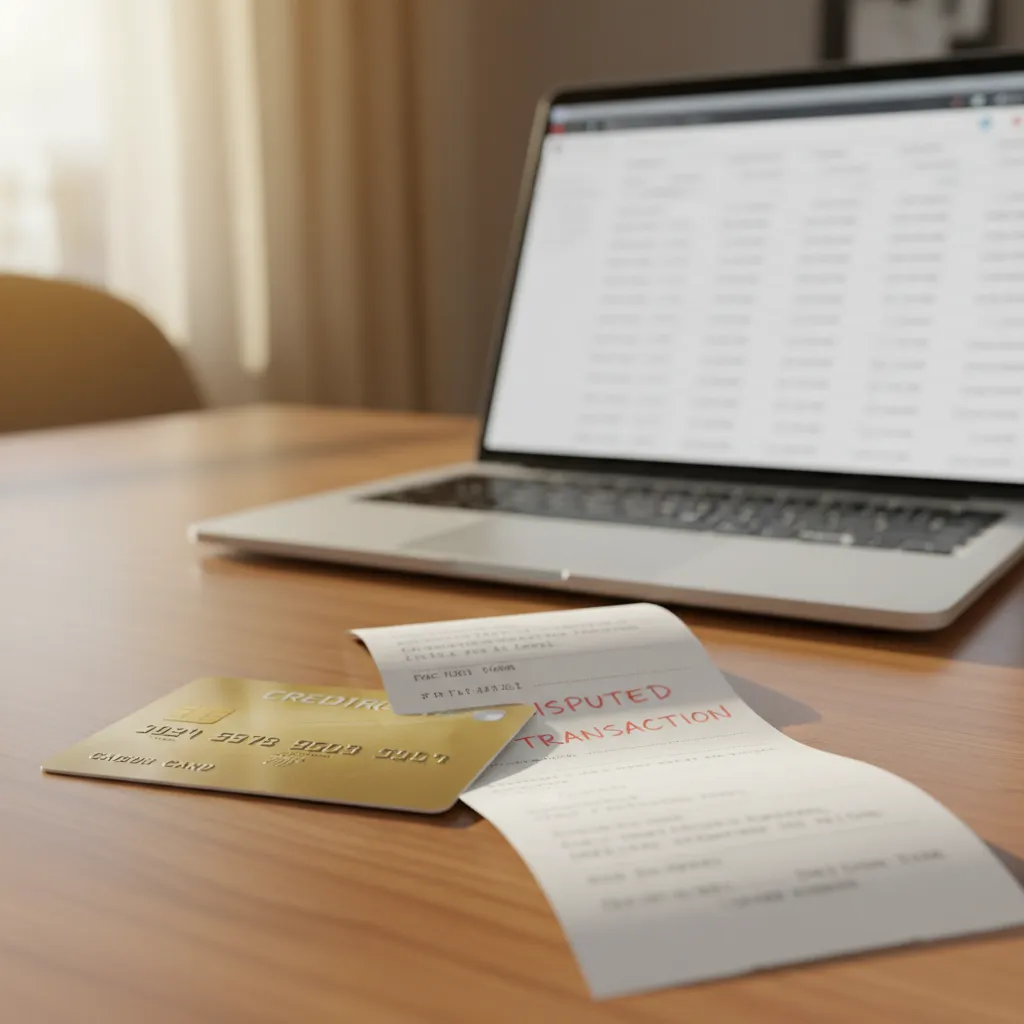
Need a credit card chargeback rebuttal letter? Write it free and preview it before you pay.
Dispute the Charge NowThe $800 Ghost Charge: A Chargeback Rebuttal Story
Sarah ran a small online shop selling refurbished electronics. She was proud of her 4.9-star rating and her careful shipping process. Then, on a Tuesday morning, she got the notification small business owners dread: Chargeback Initiated.
A customer had bought a high-end laptop for $849. Three weeks later, they filed a dispute with their bank claiming the product was "not as described."
The money was pulled from Sarah's account immediately, along with a $25 dispute fee.
"I know that laptop was perfect," Sarah told her husband. "I tested it myself and photographed the screen and the serial number before I boxed it up."
Sarah emailed the customer to ask what was wrong. The customer didn't reply. They had the laptop, and now they had their money back too.
If you run a business and face a fraudulent or "friendly" chargeback, Sarah's story shows how to contest it and win.
The 'Friendly Fraud' Epidemic
Friendly fraud is when a customer makes a legitimate purchase and then disputes the charge with their bank instead of asking the seller for a refund. They may claim they never received the item, that it arrived damaged, or that they don't recognize the charge.
Banks almost always side with the consumer at first. As the seller, you carry the entire burden of proof. You have a limited window (usually 10-20 days) to submit a rebuttal, which is your evidence that the charge was valid.
Step 1: Gathering the Evidence
Sarah didn't just write "this is a lie" in the dispute box. The bank's automated system would not weigh her frustration. She needed hard data.
She gathered:
- The Order Confirmation: Showing the customer's name, IP address and shipping address.
- The Tracking Number: Showing the package was delivered to the exact address on the order.
- The Proof of Condition: Her photos, taken before shipping, showing the laptop's serial number and working screen.
- The Communication Log: Her polite, unanswered email asking the customer about the problem.
Step 2: The Formal Rebuttal Letter
Sarah saw that the small text box her payment processor (such as Shopify or Stripe) provided wasn't enough to present the full case. She needed a formal, structured rebuttal.
She used howtowritea.com to draft a "Chargeback Rebuttal and Demand for Payment." The tool helped her:
- Cite the specific Visa/Mastercard reason code (in this case, "13.1 - Merchandise Not as Described").
- Present her evidence in a numbered order that a bank representative could follow easily.
- State that the customer had made no attempt to return the item or ask her for a refund, which most "not as described" disputes require.
She uploaded the letter as a PDF along with her photos and tracking information.
Step 3: The Result
The bank's review took 45 days, which was a long and stressful wait. Because Sarah's rebuttal was thorough and well organized, the bank ruled in her favor.
The $849 was returned to her account. The customer's bank concluded that the problem was not a bad seller but a customer trying to get a free laptop.
Lessons for Every Seller
If you face a chargeback, don't write it off as a cost of doing business. Contest it the way Sarah did:
- Documentation is your strongest evidence. Without a tracking number or delivery confirmation, you will lose 100% of the time.
- Photos matter. For high-value items, photograph the item inside the shipping box with the label visible. It proves what you actually sent.
- The 'Not as Described' Trap. If a customer says an item is broken but refuses to send it back, they are breaking the bank's own rules. Point this out in your rebuttal.
- Use a formal letter. A professional rebuttal from howtowritea.com shows the bank (and the customer) that you run a legitimate business that follows the rules.
Sarah kept her $800 because she stayed calm and got organized. Chargebacks are part of selling online, but they don't have to sink a small business. Present your facts clearly and recover your money.