
How to Get Your Earnest Money Back: A Step-by-Step Guide
How to Get Your Earnest Money Back: A Step-by-Step Guide
The inspection came back, and it was a nightmare. The foundation was cracked, the roof was at the end of its life, and there was mold in the crawlspace. You did what any smart buyer would do: you exercised your inspection contingency and canceled the contract to buy the house.
You expected your $5,000 earnest money deposit to be returned within a few days. Instead, the seller is refusing to sign the release. They're claiming you 'acted in bad faith' and they want to keep your money as 'damages' for taking their house off the market.
Now your money is sitting in a 'dead' escrow account, and you can't use it for your next down payment.
If you're in an 'earnest money standoff,' here is exactly how to get your money back.
Step 1: Review Your Contingencies
Earnest money is held by a third party (usually an escrow company or a law firm). They cannot release the money to anyone unless both the buyer and the seller sign a release, or a judge orders them to.
To win, you must prove you had a legal right to cancel. Check your contract for these common 'outs':
- Inspection Contingency: You found issues and canceled before the deadline.
- Financing Contingency: Your bank denied your loan.
- Appraisal Contingency: The house was valued for less than the purchase price.
- Sale of Prior Home: You couldn't sell your current house.
If you canceled for a reason allowed by your contract, the money belongs to you. Period.
Step 2: Don't Just 'Talk' to Your Realtor
Your real estate agent wants the deal to close. When it falls apart, they often don't want to get involved in a legal fight over the deposit.
If the seller's agent tells you, "My client isn't going to sign," don't waste time arguing with the agents. They don't have the power to force the seller to sign. You need to communicate directly with the seller and the escrow agent.
Step 3: Send the 'Notice of Default' Demand Letter
This is the most critical step. You need to send a formal, written demand to both the seller and the escrow company.
Your letter should include:
- The property address and the contract date.
- The specific clause in the contract that gave you the right to cancel.
- A copy of the cancellation notice you sent (proving it was on time).
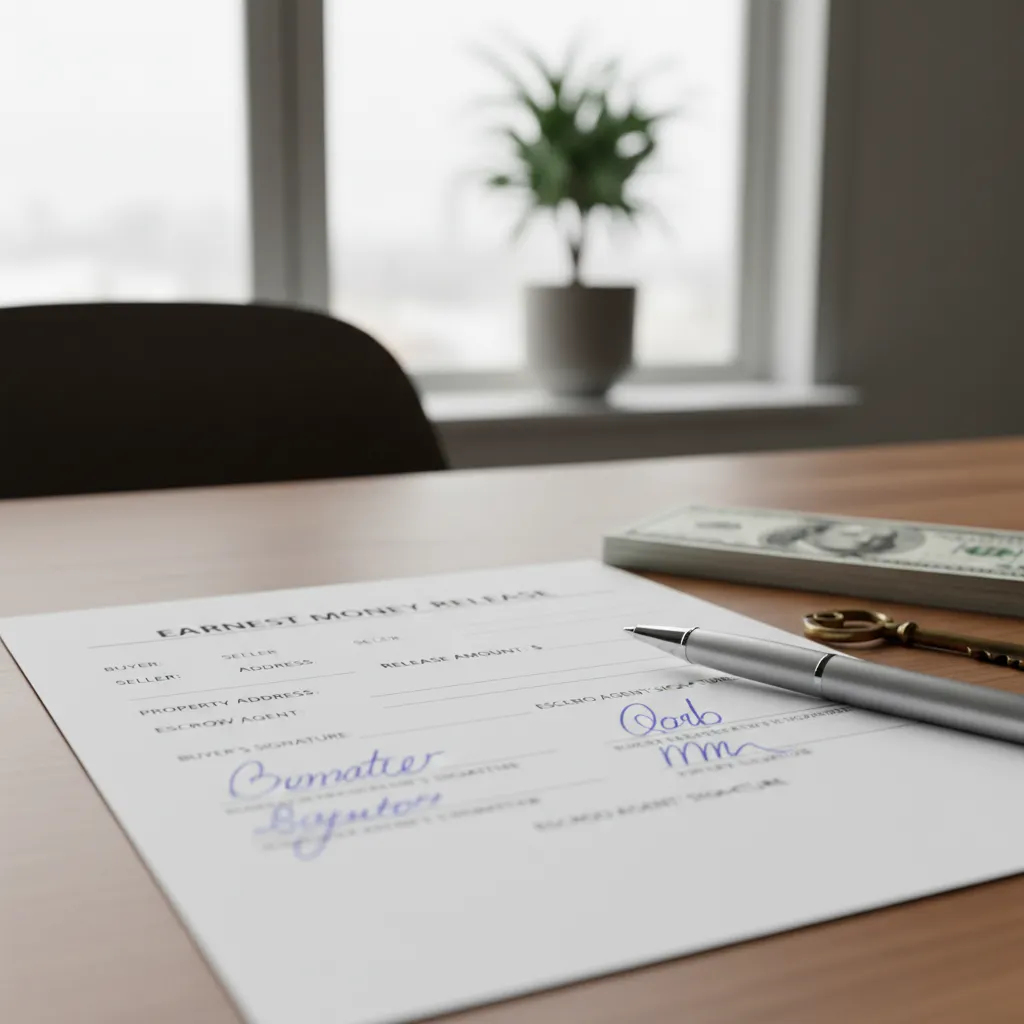
- A clear demand that the seller sign the 'Earnest Money Release' form within a specific timeframe (usually 3 to 7 days).
- A statement that if they refuse, you will pursue legal action, including suing for the deposit plus interest and legal fees.
Using a tool like howtowritea.com ensures your letter is professional and cites the correct contractual language. It moves the conversation from a 'disagreement' to a 'legal demand.'
Step 4: Mention the 'Slander of Title' Risk
In many states, if a seller refuses to release your earnest money and you file a lawsuit, you can also file a 'Lis Pendens' on the property. This effectively 'freezes' the property's title.
What does that mean for the seller? It means they can't sell the house to anyone else until your dispute is resolved. Once a seller realizes that fighting you over $5,000 might cost them a $500,000 sale to another buyer, they almost always sign the release immediately.
Step 5: Small Claims Court
If the seller still refuses, your next stop is Small Claims Court.
The good news? Earnest money cases are some of the easiest for buyers to win. If you have a signed contract and an inspection report, and you canceled within the deadline, a judge will usually rule in your favor in about fifteen minutes.
Take your demand letter and your certified mail receipt to court. It proves you tried to resolve the issue fairly before taking up the judge's time.
Summary Checklist
- Verify the deadline. Did you cancel before your contingency period expired?
- Review the 'Default' section of your contract. Does it allow the seller to keep the money? (Usually only if you breached the contract).
- Send the Demand Letter. Use howtowritea.com to make it official and mention the legal consequences.
- Send via Certified Mail. You need proof the seller received the demand.
- Contact the Escrow Officer. Let them know a formal demand has been sent and a dispute is active.
Your earnest money isn't a 'gift' to the seller for their time. It's a deposit held under specific legal conditions. If you followed the contract, that money is yours. Don't let a stubborn seller keep your next home's down payment—send your demand letter today.