
When the Ceiling Caved In: Elena’s Battle with Water Damage Denial
When the Ceiling Caved In: Elena’s Battle with Water Damage Denial
It was 2:00 AM on a rainy Tuesday when Elena heard the sound of rushing water. She lived in a modest two-story home in the suburbs, a place she had meticulously maintained for over a decade. When she stepped into her hallway, her feet splashed into an inch of standing water.
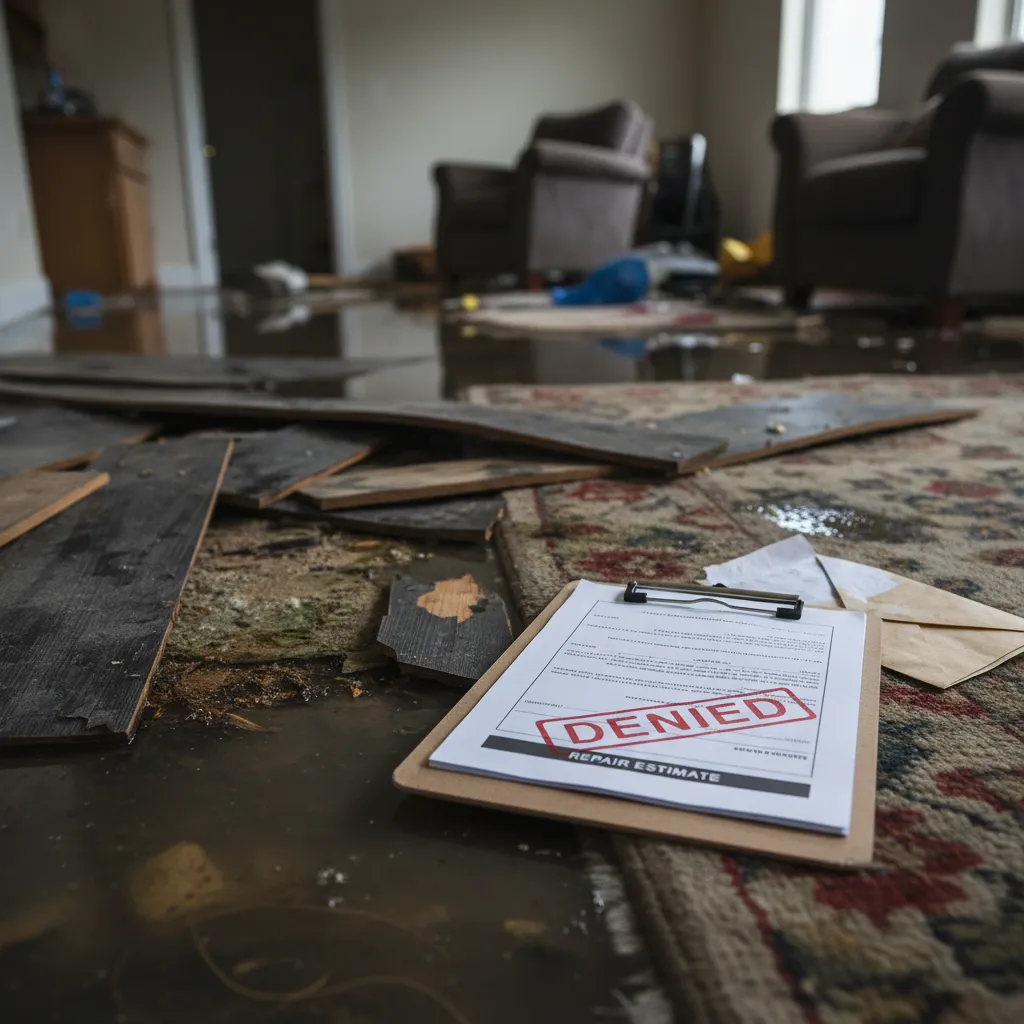
A pipe in the upstairs bathroom had burst. By the time Elena got the main water valve shut off, her dining room ceiling was sagging like a heavy wet blanket. Two hours later, a large section of drywall crashed onto her dining table, exposing sodden insulation and a tangled mess of copper piping.
"I wasn't panicked at first," Elena recalls. "I thought, 'This is why I pay $1,800 a year for homeowners insurance.' I called my agent first thing in the morning. I thought I was in good hands."
The "Gradual Seepage" Trap
The insurance adjuster arrived three days later. He spent twenty minutes looking at the hole in the ceiling, took a few photos of the pipe, and left. A week later, Elena received a letter in the mail.
Claim Denied.
The reason? The insurance company claimed the pipe hadn't "burst." They argued it was a "gradual leak" that had been happening for months, citing "rust and corrosion" on the pipe as evidence. Because the damage was deemed "gradual" rather than "sudden and accidental," it fell under a common policy exclusion for seepage and wear and tear.
"I was floored," Elena says. "There was no leak on Monday. On Tuesday, my house was a lake. How is that gradual? They were looking at a tiny bit of surface oxidation on a twenty-year-old pipe and using it as an excuse to deny a $14,200 repair bill."
Fighting the Giant
Elena tried calling the adjuster. He wouldn't return her calls. She called the main claims office and was told the decision was final but she could "file an internal appeal." She knew that an internal appeal was essentially asking the company to check its own homework—and they rarely find mistakes.
She realized she needed to change her approach. She didn't just need to be loud; she needed to be legal.
Elena started by hiring an independent plumber to inspect the pipe. For $150, the plumber wrote a one-page report stating clearly that the pipe had suffered a sudden pressure failure, not a slow leak. He noted that the surrounding wood was not rotted, which would have been the case if water had been dripping for months.
With that evidence in hand, Elena went to howtowritea.com to draft a formal demand letter.
"I didn't want to hire a lawyer yet," Elena explains. "A public adjuster wanted 30% of my claim, and a lawyer wanted a $2,500 retainer. I just wanted my insurance company to do what I paid them for."
The Power of the Written Word
The demand letter Elena created was professional and firm. It didn't just say she was unhappy. It outlined the facts: the date of the incident, the specific policy language regarding "sudden and accidental" discharge, and the findings of her independent plumber.
Most importantly, the letter mentioned "bad faith." She pointed out that by ignoring the evidence of a sudden burst and failing to conduct a thorough investigation, the company might be violating state insurance laws.
"I sent the letter via Certified Mail," Elena says. "I wanted that green signature card back in my hand. I wanted proof that they couldn't ignore me anymore."
The Result
Ten days after the insurance company received her demand letter, Elena’s phone rang. It was a supervisor from the claims department—not the original adjuster.
"They told me they had 'reviewed the additional information' I provided," Elena says with a small smile. "They didn't admit they were wrong. They just said they were 'reversing the denial as a gesture of goodwill.' Two days later, a check for $14,200 arrived via overnight mail."
Elena’s Advice for Homeowners
Elena’s experience is a textbook example of how insurance companies often use "gradual seepage" as a default denial for water claims. If you find yourself in this situation, Elena has three pieces of advice:
- Don't Clean Up Too Fast: Take hundreds of photos and videos before the restoration crew starts ripping things out. You need evidence of what the "hidden" areas looked like the moment they were exposed.
- Get an Independent Opinion: Don't rely solely on the insurance company’s adjuster. A $100-$200 inspection from a licensed plumber or contractor can provide the evidence you need to flip a denial.
- Formalize the Dispute: Phone calls are easily ignored or "lost" in the system. A formal demand letter created through a service like howtowritea.com creates a legal record that the company has to address.
"Insurance companies bank on you being too tired or too intimidated to fight," Elena says. "But once they see you’ve got your facts straight and you’re willing to put it in writing, they suddenly find a way to pay. You just have to be willing to stand your ground."
Water damage is stressful enough without having to fight your own insurance provider. If you've been denied, remember Elena’s story. A professional demand letter is often the only tool you need to get the repairs you've already paid for through your premiums.