
Stopping Online Defamation: How to Send a Cease and Desist
Stopping Online Defamation: How to Send a Cease and Desist
In the age of social media, a single person with a grudge can do more damage to your reputation in ten minutes than a decade of hard work can build. Whether it’s a disgruntled ex-employee, a "keyboard warrior" on Facebook, or a competitor posting fake reviews on Yelp, online defamation is a serious threat to your livelihood and your mental health.
If someone is spreading false statements about you that are causing harm, you don't have to just "ignore it." Here is exactly how to take action and stop defamation before it spreads further.
Is it Actually Defamation?
Before you send a letter, you need to understand the legal definition of defamation. Not every mean comment or bad review is illegal. To be considered defamation, the statement must meet four criteria:
- It must be false: If someone says you are "rude" or "overpriced," that is an opinion, and opinions are protected by the First Amendment. If they say you "stole $500 from the cash register" and you didn't, that is a false statement of fact.
- It must be "published": In legal terms, this just means it was told to at least one other person. A Facebook post, a tweet, a review, or even an email counts.
- It must identify you: People must be able to tell the statement is about you or your business.
- It must cause harm: This could be financial harm (lost customers), damage to your reputation, or emotional distress.
Step 1: Preserve the Evidence
The moment you see a defamatory post, do not reply to it. Your first move should be to document it.
- Take Screenshots: Capture the post, the date, the name of the person who posted it, and any comments or "shares" it has received.
- Copy URLs: Save the direct link to the post or review.
- Identify the Author: If they are using a pseudonym, try to find any identifying information. If it’s on a platform like Glassdoor or Yelp, note the specific details of the claim.
Step 2: The Formal Cease and Desist
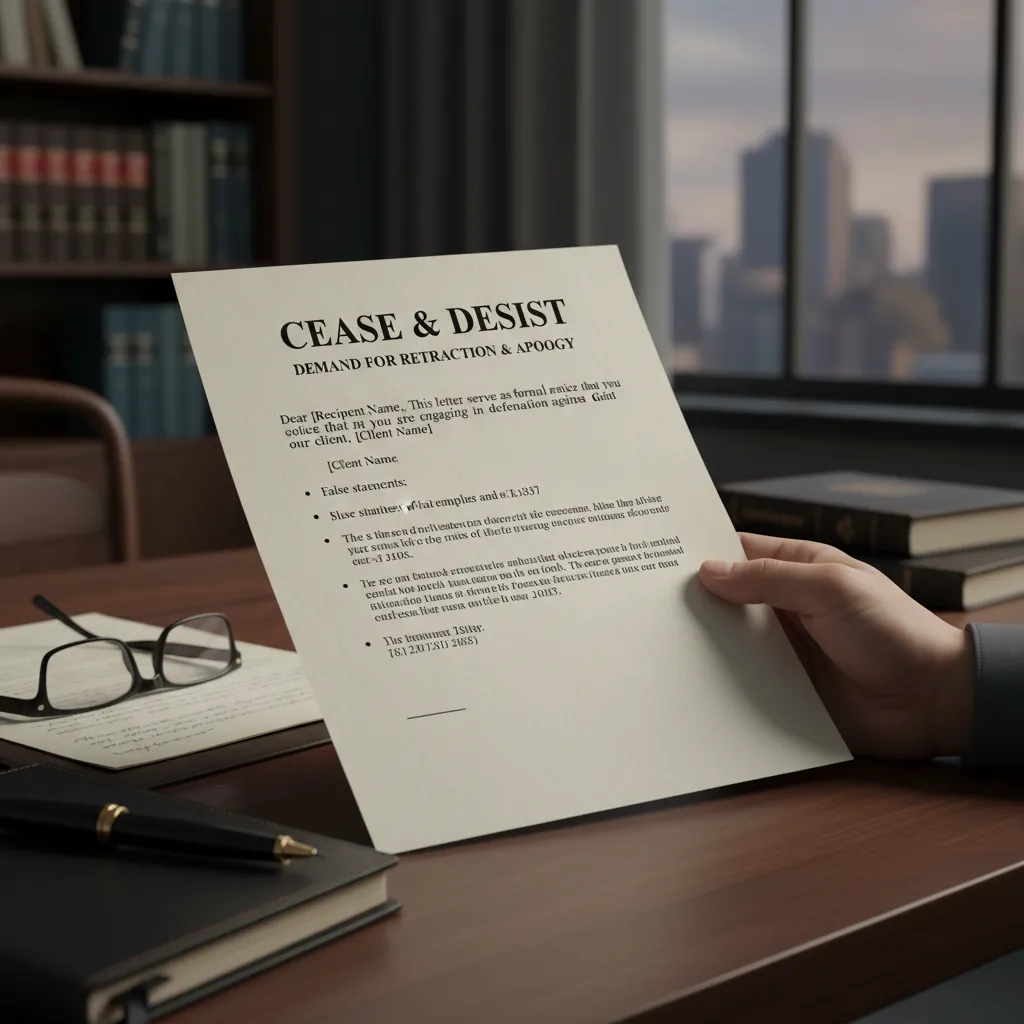
A cease and desist letter is the most effective way to stop defamation without spending thousands on a lawsuit. It is a formal warning that says: "I know what you are doing, it is illegal, and if you don't stop and retract it immediately, I will sue you."
Most "trolls" and angry individuals think they are anonymous or that their words don't have consequences. A formal letter, delivered to their door or inbox, usually shatters that illusion.
What your letter should include:
- The specific statements: Quote exactly what they said. Don't be vague.
- Why it is false: Briefly state the truth (e.g., "I have never been arrested for fraud").
- The harm caused: State that their actions are damaging your reputation or business.
- The demands: Tell them exactly what to do. Usually, this means:
- Removing the post immediately.
- Posting a public retraction or apology.
- Agreeing in writing to stop making further defamatory statements.
- The deadline: Give them a short window to comply (usually 48 to 72 hours).
You can hire a lawyer to write this, which will likely cost you $500 to $1,500. Or, you can use howtowritea.com. For a fraction of the cost ($9 to $29), the platform helps you generate a professional, legally-sound cease and desist letter that carries serious weight.
Step 3: Contact the Platform
If the individual refuses to take the post down, your next step is to report it to the platform where it was posted (Facebook, Google, Yelp, etc.).
Most platforms have policies against "harassment" or "misinformation." While they are often slow to act, providing them with a copy of your formal cease and desist letter can sometimes speed up the process. It shows them that there is a legitimate legal dispute and that the post isn't just a "difference of opinion."
Step 4: When to Sue
If the letter doesn't work and the damage is significant (e.g., you lost a $50,000 contract because of a lie), you may need to file a defamation lawsuit.
Defamation cases are notoriously difficult and expensive. However, having a copy of your cease and desist letter—and proof that the person received it and continued to lie—makes your case much stronger. It proves "malice," which can lead to higher damages in court.
A Note on "The Streisand Effect"
Before you send a letter, ask yourself: Is this post already dying out? Sometimes, making a big deal out of a small, obscure comment can actually draw more attention to it. This is known as the Streisand Effect.
If the post is on a major review site or is being shared widely in your community, a cease and desist is absolutely necessary. If it’s a random comment on a post with zero likes, you might want to wait 24 hours to see if it disappears on its own.
Take Control of Your Reputation
Your name is your most valuable asset. When someone tries to tarnish it with lies, you have every right to defend it. You don't need a $10,000 legal fund to stand up for yourself. Start with a formal letter. Be clear, be firm, and use a tool like howtowritea.com to ensure you’re doing it right.
Most people back down the moment they realize their "free speech" doesn't give them a license to lie.