
The $600 Voucher: How Sarah Got Airline Compensation
The $600 Voucher: How Sarah Got Airline Compensation
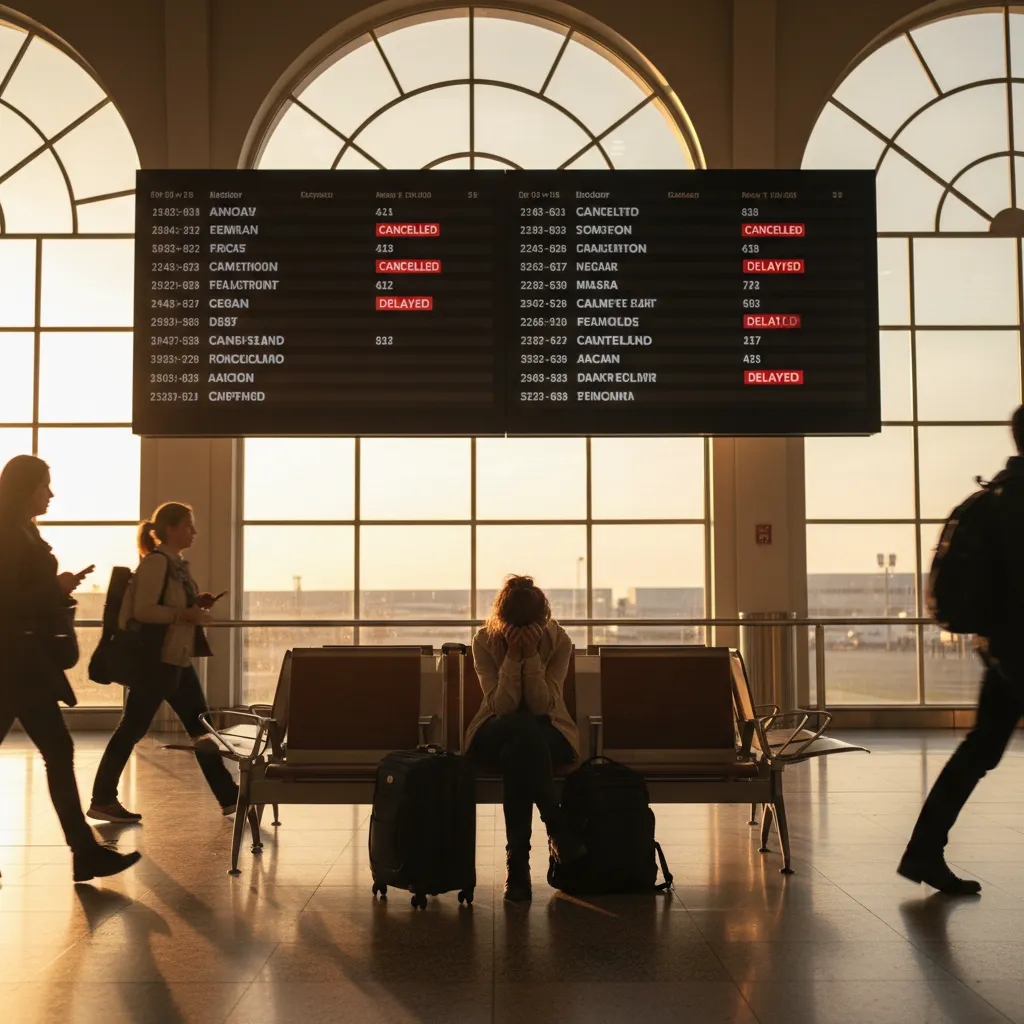
Sarah was standing in a line that stretched past three gates at Newark Liberty International Airport. It was 11:30 PM. Her flight to London had been cancelled two hours earlier. The reason? "Operational issues."
The gate agent was exhausted. When Sarah finally reached the front, she was handed a $10 meal voucher for a terminal where every restaurant was already closed. "We can rebook you for Thursday," the agent said. It was Monday night.
"What about a hotel?" Sarah asked. "Sorry, since it was an operational issue and not a mechanical one, we don't provide lodging," the agent replied, not looking up.
Sarah felt that familiar mix of rage and helplessness. She was looking at three nights in a hotel she couldn't afford, or three nights sleeping on a terminal floor. But Sarah knew something the gate agent hoped she didn't: she was flying to Europe, and European law (specifically EC 261/2004) doesn't care about "operational issues."
The Secret Weapon: EC 261 and DOT Rules
Most travelers assume that if a flight is cancelled, the airline's only job is to get you on the next plane. That’s wrong. Depending on where you are flying and which airline you are using, you are often entitled to cold, hard cash.
- In the US: If you are "bumped" from an overbooked flight, the airline owes you up to $1,550. If your flight is cancelled or significantly delayed, they must refund your ticket if you choose not to travel, and the DOT recently passed rules requiring automatic refunds for significant delays.
- In Europe (and flights to/from Europe): Under EC 261, if your flight is cancelled or delayed more than 3 hours for reasons within the airline's control, they owe you up to €600 (about $650).
Sarah’s flight fell right into this category. The airline tried to call it an "operational issue," but Sarah knew that meant they didn't have enough staff—which is the airline's fault, not an "act of God" like a blizzard.
How Sarah Fought Back
Sarah didn't argue with the gate agent. She knew the person behind the desk had no power to cut checks. Instead, she took photos of the departure board showing her cancelled flight. She saved her boarding pass. Then, she booked a modest hotel nearby and kept the receipt.
The next morning, from her hotel room, she went to howtowritea.com.
"I’d tried the airline's online 'claim form' before, and it was a black hole," Sarah told me. "I wanted something that showed I knew the law. I used the site to generate a formal demand letter citing EC 261/2004 and the specific DOT regulations regarding 'Duty of Care.'"
She didn't just ask for the €600 compensation; she demanded reimbursement for her $180 hotel room and her $45 in Uber rides.
The Result
Ten days after she sent the letter via email and certified mail to the airline's corporate headquarters, she got a response. It wasn't a $10 meal voucher. It was an apology and a confirmation that $875 (compensation + expenses) was being wired to her account.
"The best part wasn't even the money," Sarah said. "It was the feeling that I wasn't just another number they could push around. The moment I used the right legal terminology, the 'operational issue' excuse disappeared."
Why You Need a Formal Letter
Airlines spend millions of dollars on systems designed to ignore you. Their customer service bots are programmed to offer you "points" or "travel credits" that expire in six months. They do this because they know 90% of people will just give up.
A formal demand letter changes the math for them. It signals that:
- You know exactly which laws apply to your flight.
- You have documented your expenses.
- You are one step away from filing a claim with the Department of Transportation or a small claims court.
For an airline, it is cheaper to pay you the $600 they owe you than to have their legal department deal with a formal dispute.
Don't Leave Money on the Runway
If you’ve had a flight cancelled or delayed in the last three years, you might still be owed money. Don't let the airlines keep it.
Hiring a "flight compensation company" usually means giving them 30% to 50% of your payout. Writing it yourself is free but risky if you don't know the specific codes. Using howtowritea.com costs about $29 and lets you keep 100% of your compensation.
Sarah got her $600. You should get yours, too. The next time you're stuck in an airport, don't just get mad—get the letter ready.