
The Quiet War: How Jordan Stopped the Harassment
The Quiet War: How Jordan Stopped the Harassment
Jordan’s phone buzzed on the nightstand. 2:14 AM. Another message from a number she had already blocked three times. This one was from a new VoIP number, but the tone was unmistakable.
"I saw you at the coffee shop today," the message read. "Nice blue dress. You think you’re so smart, don’t you?"
The sender was a former coworker, someone Jordan had barely spoken to before he was fired for "behavioral issues" six months ago. Since then, he had made it his mission to ruin Jordan’s sense of safety. He sent dozens of emails to her personal account. He tagged her in bizarre, rambling LinkedIn posts. He left "gifts" on her car windshield.
"I felt like I was losing my mind," Jordan said. "It wasn't a physical assault, so I didn't think I could call the police. But I couldn't sleep. I was checking under my car every morning. I was living in a state of constant, low-level terror."
Jordan’s story is more common than most people realize. Harassment often exists in a "gray area" where the behavior is clearly abusive but hasn't yet crossed the line into a crime that the police can easily prosecute.
The Problem with "Just Ignoring It"
Everyone told Jordan the same thing: "Just ignore him. He’ll get bored and stop."
But for many harassers, silence is an invitation. They see it as a lack of resistance, or worse, they enjoy the power of knowing they are affecting you without you being able to do anything about it.
"Ignoring it didn't work," Jordan explained. "It actually made it worse. He started contacting my friends, telling them I was 'unstable.' I realized I needed to draw a line in the sand."
The Turning Point: The Cease and Desist
Jordan considered getting a restraining order, but her lawyer friend told her it might be difficult. Restraining orders usually require proof of a "credible threat of violence," and while the messages were creepy, they hadn't explicitly threatened to hurt her yet.
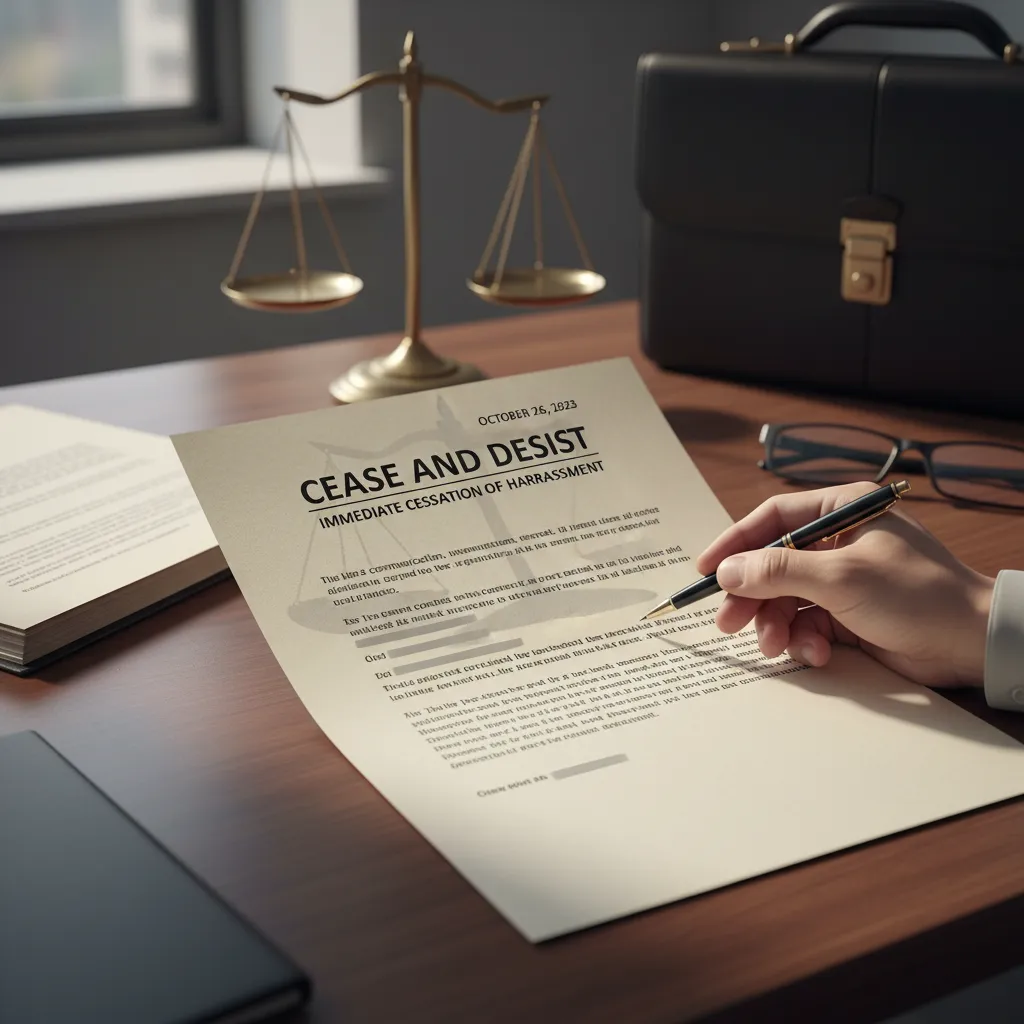
Instead, the friend suggested a formal Cease and Desist letter for harassment.
"I didn't think a piece of paper would matter to someone like him," Jordan said. "But my friend explained that a formal letter does two things. First, it shatters the 'anonymous' feel of the harassment. It shows them you have their information and you are documenting their behavior. Second, it creates a 'Notice' record. If you ever do need a restraining order or a police report, the first thing a judge will ask is: 'Did you tell them to stop?'"
How Jordan Handled the Letter
Jordan didn't want to spend $500 on a lawyer just for a letter. She also didn't want to engage with the harasser directly. She went to howtowritea.com.
She entered the harasser’s name and last known address. She listed the types of harassment: the unwanted messages, the stalking behavior, and the contact with third parties. In minutes, she had a professional, legally-sound letter that cited state harassment and stalking statutes.
She sent the letter via USPS Certified Mail. Because she didn't want him to have her current address, she used a P.O. Box as the return address.
The Result
The harasser signed for the letter on a Thursday. Jordan was terrified he would retaliate. But instead, the opposite happened.
The messages stopped. The LinkedIn tags vanished. The "gifts" on her car ceased.
"The letter was like a bucket of cold water on him," Jordan said. "It moved the harassment from a 'private game' in his head to a legal reality with consequences. He realized that if he sent one more message, I had the proof to go to the police and show that I had already given him a formal warning."
Why a Formal Letter Works
Most harassers are bullies who thrive on the idea that their victims are too scared or too confused to act. A formal cease and desist letter through howtowritea.com changes that dynamic. It signals:
- Seriousness: You are prepared to take legal action.
- Documentation: You are keeping a file of their behavior.
- Legal Knowledge: You know which specific laws they are breaking.
For Jordan, the letter didn't just stop the messages; it gave her her life back. "I finally felt like I was in control again. I wasn't the 'victim' anymore; I was the one setting the rules."
If You Are Being Harassed
Don't wait until the behavior escalates. If someone is making you feel unsafe, harassed, or stalked:
- Document Everything: Save every text, email, and post.
- Tell Them to Stop Once: Send a clear, written message (like a cease and desist) telling them to end all contact.
- Use a Formal Letter: A professional letter carries more weight than a text.
- Go to the Police if Necessary: If the behavior continues after the letter, take your documentation and the signed mail receipt to your local precinct.
You have the right to live in peace. Jordan fought for that right, and you can too. Start with a letter. Let them know the game is over.