
Your Final Paycheck Is Missing: How to Get the Money You're Owed
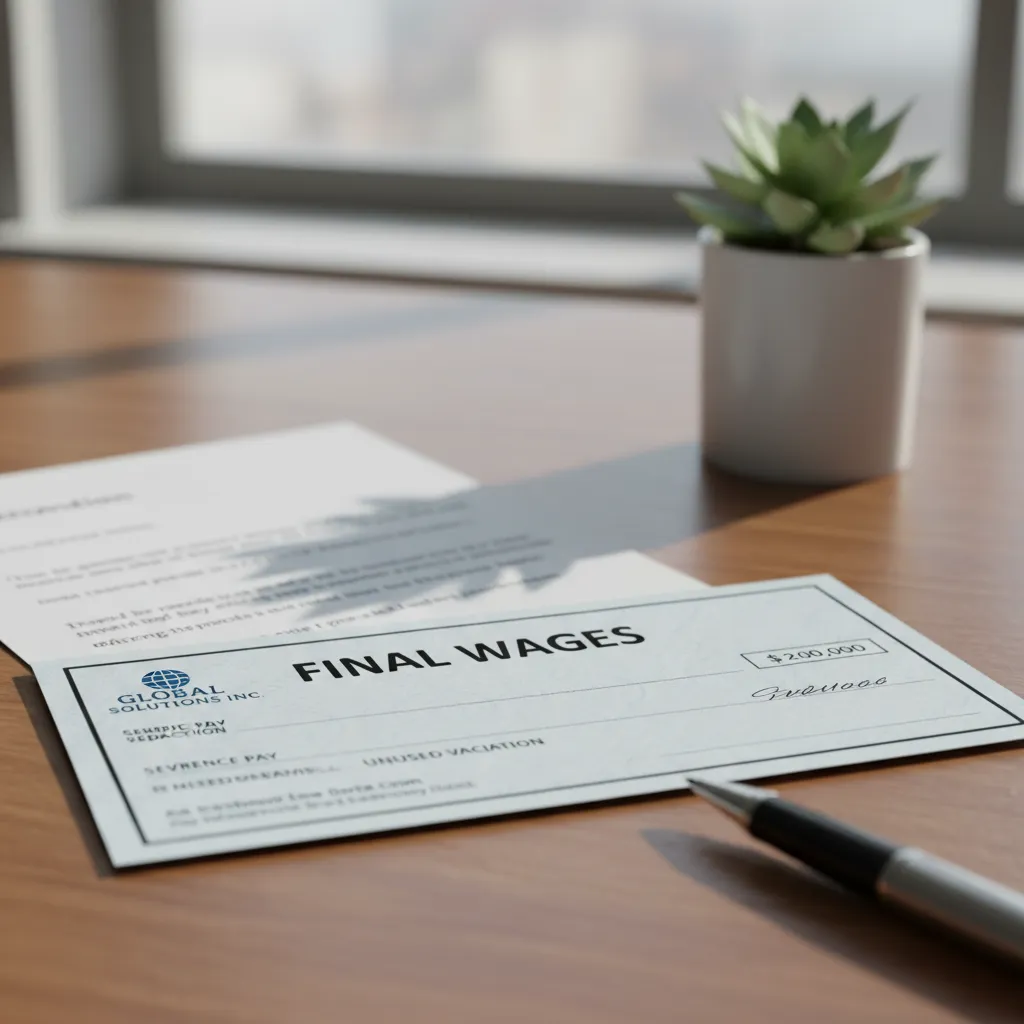
Your Final Paycheck Is Missing: How to Get the Money You're Owed
You've moved on. Maybe you landed a better gig, or maybe you were part of a round of layoffs. Either way, you've done your time, handed in your keys, and said your goodbyes. Now, you're just waiting for that last bit of closure: your final paycheck.
But the payday comes and goes, and your bank account remains empty. You check your mail. Nothing. You send a polite email to HR, and they give you the run-around. "We're processing it," they say. Or worse, they tell you they're withholding it until you return a laptop you already turned in two weeks ago.
It’s frustrating, it’s stressful, and in most cases, it’s completely illegal.
The Law Is on Your Side
Every state has laws governing when a final paycheck must be issued. While the specifics vary, the general rule is that you don't have to wait indefinitely.
- In California: If you are fired or laid off, you must be paid immediately. If you quit with 72 hours' notice, you must be paid on your last day.
- In New York: You must be paid by the next regularly scheduled payday.
- In Texas: If you're discharged, you must be paid within six days. If you quit, you're paid on the next scheduled payday.
The most important thing to know is that an employer generally cannot withhold your entire paycheck because they claim you owe them money for "damages" or "lost equipment." In many states, they can't even deduct those costs without your written consent.
Step 1: Check Your Final Pay Requirements
Before you get aggressive, double-check your state's Department of Labor website. You need to know the exact timeline. If the law says they have 14 days and it's only been 10, a formal demand might be premature.
Also, check if your state requires "accrued vacation" to be paid out. In states like California, Illinois, and Massachusetts, earned vacation time is considered wages. If you had 40 hours of PTO banked, that money belongs to you just as much as your hourly rate does.
Step 2: The "Friendly" Follow-Up
Sometimes things actually do get lost in the shuffle. A payroll clerk might have entered the wrong bank info for a paper check, or a manager might have forgotten to approve your final timesheet.
Send one—and only one—polite email.
"Hi HR Team, I noticed I haven't received my final paycheck for the period ending [Date]. Could you please let me know when I can expect the direct deposit or if a check has been mailed? Thanks, [Your Name]."
If they ignore this or give you a vague "we're working on it," it's time to stop being polite.
Step 3: Send a Formal Demand Letter
This is the step that usually gets results. A formal demand letter is a document that tells your employer you know the law, you know they are in violation of it, and you are prepared to take further action.
Why does a letter work better than an email? Because a letter creates a legal paper trail. When an employer receives a formal demand via certified mail, they realize that if this goes to a labor board or small claims court, they are going to lose—and it’s going to cost them a lot more than just your wages.
What to include in your demand:
- The exact dates you worked.
- The total amount of gross wages owed.
- Any unpaid commissions or vacation time.
- A citation of the state law they are violating (e.g., "Under California Labor Code Section 201...").
- A clear deadline for payment (usually 5 to 10 days).
Writing this yourself can be tricky if you aren't familiar with labor codes. This is exactly why howtowritea.com exists. It helps you generate a professional demand letter that hits all the right legal notes for your specific state for about $19.
Step 4: The Waiting Time Penalty
This is the "secret weapon" many employees don't know about. In several states, if an employer willfully withholds your final pay, they owe you a "waiting time penalty."
In California, for example, the penalty is one full day of wages for every day the paycheck is late, up to a maximum of 30 days. If you made $200 a day and your check is 20 days late, the company might owe you $4,000 on top of your original paycheck. Mentioning this penalty in your demand letter often makes the "processing" happen a lot faster.
Step 5: Escalate to the Department of Labor or Small Claims
If the demand letter doesn't work, you have two main options:
- File a Wage Claim: Most states have a Department of Labor or a Labor Commissioner where you can file a claim for free. They will investigate and can force the employer to pay. The downside? It can take 6 to 18 months to get a hearing.
- Small Claims Court: This is usually faster (2 to 4 months). You don't need a lawyer, and the filing fees are low. Your demand letter becomes your primary evidence, showing the judge that you tried to resolve the issue reasonably before suing.
Why Do Employers Do This?
Most of the time, it’s not because they don't have the money. It’s a power move. They might be angry that you left, or they might be trying to "punish" you for a mistake they think you made.
By withholding your pay, they are betting that you'll just go away because you don't want the "drama." They are banking on your silence.
Don't give it to them. Your wages are your property. You traded your time and your skills for that money, and no employer has the right to keep it once the work is done.
If you're tired of waiting, take five minutes to visit howtowritea.com and draft your demand. It’s the fastest way to turn "we're processing it" into "your check is in the mail."