
The Landlord Who Disappeared: A Story of a Stolen Security Deposit
The Landlord Who Disappeared: A Story of a Stolen Security Deposit
Chloe had lived in the same one-bedroom apartment in Austin for three years. She was a "dream tenant." She paid her rent three days early every month, she never called about minor repairs, and she even painted the bathroom back to its original "eggshell white" before she moved out.
When she handed over the keys to her landlord, Mr. Henderson, he told her everything looked great. "You'll have your $1,800 deposit back in two weeks," he said with a smile.
Three weeks went by. No check.
Four weeks went by. Chloe sent a polite text. No response.
By week six, Chloe’s calls were going straight to voicemail. The man who had been so responsive when the rent was due had effectively vanished. Chloe was out $1,800, and she needed that money for the deposit on her new place.
The Frustration of Being Ignored
Chloe did what most people do: she got angry. She left a scathing review on a local landlord-rating site. She posted on Facebook asking if anyone knew where Mr. Henderson lived. She even drove back to the old apartment, but a new family had already moved in, and they had no idea who the landlord was—they dealt with a management company Chloe had never heard of.
Being ignored by a landlord is a specific kind of powerlessness. They have your money, they have the property, and you have... nothing but a silent cell phone.
The Realization: Politeness Wasn't Working
Chloe realized that Mr. Henderson wasn't "forgetting" or "busy." He was banking on the fact that Chloe was a nice person who would eventually give up. He assumed she didn't know the law or that she wouldn't think $1,800 was worth the "hassle" of a legal fight.
She spent a night Googling "Texas security deposit laws." She discovered that in Texas, a landlord has 30 days to return a deposit. If they miss that window without a valid reason, they can be held liable for three times the amount of the deposit, plus $100, plus attorney fees.
Mr. Henderson didn't just owe her $1,800 anymore. He potentially owed her over $5,500.
The Strategy: From "Can You Please?" to "You Must."
Chloe knew she couldn't afford a lawyer. One firm told her they required a $1,000 retainer just to look at her lease. Another told her the case was "too small" for them to care about.
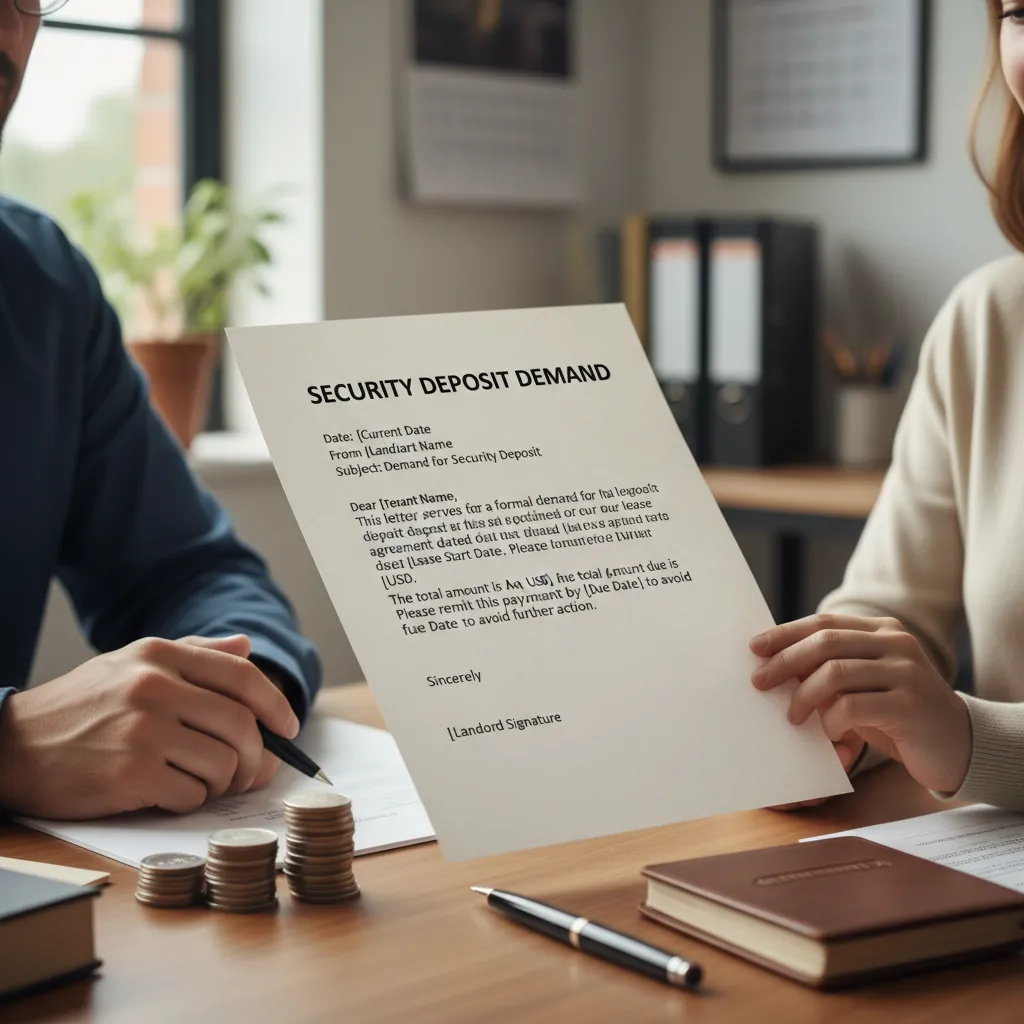
That's when she found howtowritea.com. Instead of just sending another text, she used the platform to generate a formal Demand for Return of Security Deposit.
The letter was different from her texts. It didn't ask for the money. It demanded it. It cited Texas Property Code Section 92.109. It laid out the specific timeline of her move-out and his failure to respond. Most importantly, it mentioned the "treble damages" (the triple payout) she was entitled to if she went to court.
The Power of the "Certified" Stamp
Chloe spent $24 on howtowritea.com to get the professional letter, and then she went to the post office. She sent it via USPS Certified Mail with a Return Receipt Requested.
This was the turning point. When you send a text, the landlord can say "my phone was broken." When you send an email, they can say "it went to spam." When you send a Certified Letter, a mail carrier physically hands them a document and they have to sign for it. There is a legal record of the exact second they were notified of the demand.
The Response (Or Lack Thereof)
The tracking showed the letter was delivered on a Tuesday at 2:14 PM. Mr. Henderson signed for it.
For four days, there was silence. Chloe started to worry. "What if he still doesn't care?" she thought.
On the fifth day, her phone buzzed. It was a Zelle notification.
Payment received: $1,800.00 from Richard Henderson.
No apology. No "sorry for the delay." Just the money.
Why It Worked
Mr. Henderson wasn't scared of Chloe. He was scared of a judge.
When he saw the formal letter citing the specific state code and the threat of triple damages, his "business math" changed. Before the letter, the most he could lose was $1,800. After the letter, he was looking at a potential $5,500 loss plus the time and embarrassment of appearing in small claims court.
For a landlord like Mr. Henderson, paying the $1,800 was the cheapest way to make the "legal problem" go away.
Chloe's Advice to Tenants
"If you're waiting for your landlord to be a 'good person,' you're going to be waiting a long time," Chloe says now. "The moment that 30-day window closes, stop texting. Stop calling."
Her three-step plan for anyone in her shoes:
- Get your evidence: Photos of the clean apartment and a copy of the lease.
- Stop being 'nice': Politeness is for people who haven't stolen your money.
- Send a formal demand: Use a tool like howtowritea.com to make it look professional and send it Certified Mail.
Chloe didn't need a lawyer, and she didn't need to go to court. She just needed to show her landlord that she knew her rights and was ready to enforce them. In the world of rental real estate, a formal letter is worth a thousand text messages.