
How to Get Your GAP Insurance Refund: A Step-by-Step Guide
How to Get Your GAP Insurance Refund: A Step-by-Step Guide
When you bought your car, the finance manager at the dealership probably sold you GAP insurance. They told you it was "essential" because it would cover the difference between what your car is worth and what you owe if the car gets totaled.
What they probably didn't tell you is that if you pay off your car loan early—or if you sell the car or trade it in—you are entitled to a refund for the "unearned" portion of that GAP insurance policy.
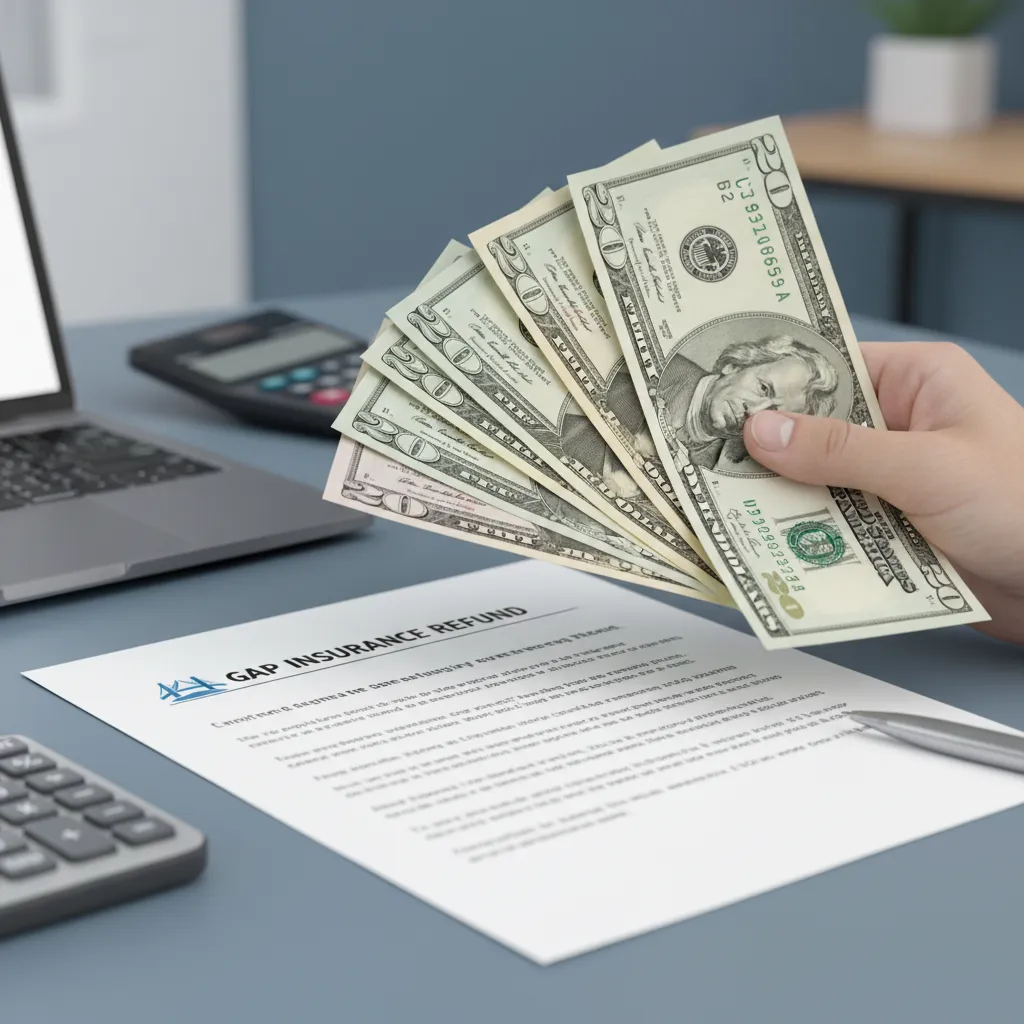
For many people, this refund is $300, $600, or even $1,000. But the dealership and the GAP insurance company aren't just going to send you a check automatically. You have to ask for it.
Here is the exact process for getting your GAP insurance refund back in your pocket.
Step 1: Determine if You Are Owed a Refund
GAP insurance is usually paid as a "lump sum" at the beginning of your loan, often between $600 and $1,200, and it's rolled into your monthly payments. This payment covers you for the entire length of the loan (e.g., 60 or 72 months).
If your loan ends before that time, you haven't "used" all the insurance you paid for. You are owed a refund if:
- You paid off your car loan early.
- You sold your car.
- You traded your car in for a new one.
- Your car was totaled (in some cases, depending on the policy).
- You refinanced your car loan with a different lender.
Step 2: Gather Your Documentation
You cannot just call the dealership and say "I want my money." You need a paper trail. You will need three main documents:
- The GAP Insurance Contract: This is the original paper you signed at the dealership. It lists the "Policy Number" and the total amount you paid for the GAP coverage.
- The Payoff Letter: This is a letter from your bank or lender stating that the loan has been paid in full and the date it was closed.
- The Odometer Disclosure (If sold/traded): If you sold or traded the car, you'll need a document showing the mileage at the time of the sale.
If you can't find your original GAP contract, call the dealership's finance department and ask for a copy. They are required to keep these on file.
Step 3: Calculate Your Estimated Refund
The refund is usually "pro-rated." This means if you paid for a 60-month policy and you paid off the loan in 30 months, you should get roughly 50% of your money back (minus some small administrative fees).
If you paid $900 for a 6-year policy and you traded the car in after 2 years, you are owed roughly $600. That is a significant amount of money to leave on the table.
Step 4: Contact the Correct Party
This is where it gets confusing. Who actually owes you the money?
- The Dealership: Usually, the dealership sold you the policy, but they aren't the ones who hold the money. However, they are often responsible for processing the cancellation.
- The GAP Provider: This is the actual insurance company listed on your contract (e.g., Ethos, Allstate, Safe-Guard).
- The Lender: In some states, the bank that held your loan is responsible for notifying the GAP company, but they rarely do it.
The best strategy is to contact the GAP Provider directly. Their contact info and "cancellation instructions" should be on the back of your GAP contract.
Step 5: Send a Formal Cancellation Demand
Most GAP providers will tell you to "just send us an email." Don't do that. Emails get lost, ignored, or "trapped in spam."
The most effective way to get your refund is to send a formal Demand for GAP Insurance Refund via USPS Certified Mail. This creates a legal record that they received your request.
Hiring a lawyer for this is a waste of money—they’ll charge you more than the refund is worth. Instead, you can use howtowritea.com to generate a professional demand letter for under $30.
The letter includes:
- Your policy number and VIN.
- The date the loan was paid off.
- The specific request to cancel the policy and issue a pro-rated refund.
- A reference to state laws that require these refunds (many states, like California and Alabama, have very strict laws about GAP refunds).
Step 6: Follow Up After 30 Days
Once the GAP company receives your certified letter, they usually have 30 to 60 days to process the refund. If you haven't received a check by then, call them and provide the Certified Mail tracking number.
In many cases, the refund isn't sent to you—it’s sent back to the lender. If your loan is already paid off, the lender is then responsible for sending that money to you. Check with your bank to see if they received a "credit" from the GAP company.
Common Obstacles to Watch For
"The policy is non-refundable."
Check your contract. In most states, GAP insurance is legally required to be refundable if cancelled early. Dealerships might tell you it's non-refundable to avoid doing the paperwork, but the contract usually says otherwise.
"You have to come into the dealership in person."
They say this because they want to try to sell you a new car or a different product. You are not legally required to go to the dealership in person to cancel a GAP policy. A written demand is sufficient.
"It's been too long."
Most states have a statute of limitations for these refunds (usually 3 to 6 years). If you paid off a car two years ago and never got your refund, you can still claim it today.
The Bottom Line
GAP insurance companies make millions of dollars every year from "unclaimed" refunds. They are betting on the fact that you will forget about the $400 or $500 they owe you.
Don't let them keep your money. Gather your payoff letter, use howtowritea.com to send a formal demand, and get your refund. It’s your money—go get it.