
Contractor Breach of Contract: DIY Demand Letters vs. Small Claims Court
Contractor Breach of Contract: DIY Demand Letters vs. Small Claims Court
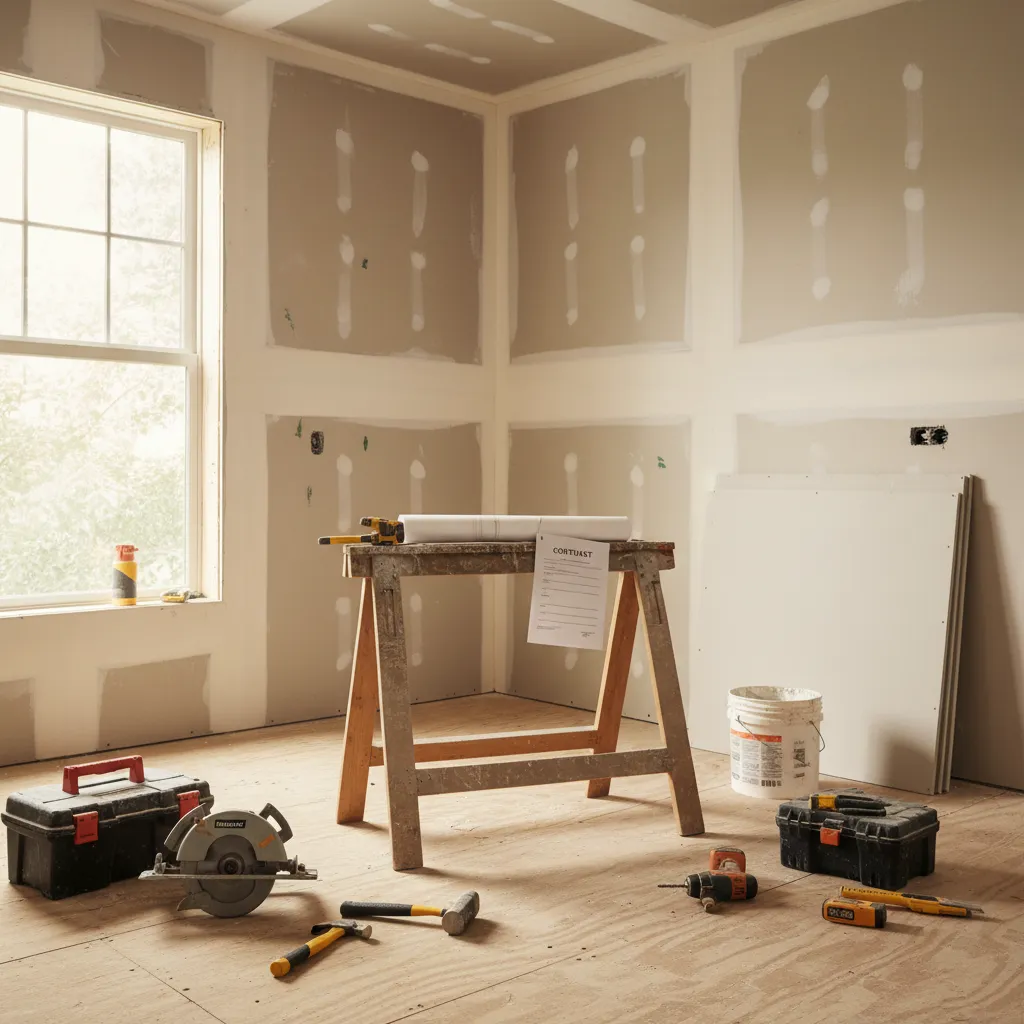
You hired a contractor to remodel your kitchen. You paid a $5,000 deposit. They showed up for two days, tore out your cabinets, and then... nothing. It’s been three weeks. They aren't answering your texts, and your kitchen is a construction zone of dust and exposed wires.
Or maybe they did finish the job, but the tile is crooked, the sink leaks, and they used the "budget" countertop when you paid for premium granite.
This is a breach of contract. Whether they "ghosted" you or just did terrible work, you are entitled to get your money back or have the work fixed. But how you handle the next 14 days will determine if you actually get a refund or if you just lose more money.
Here is the breakdown of your two best options.
Option 1: The "Small Claims Court" Path
Cost: $50 – $150 (Filing fees) Approach: Legal / Judicial Speed: Slow (3 to 9 months)
Small claims court is designed for cases like this. In most states, you can sue for up to $5,000 or $10,000 without a lawyer. You present your contract, your photos of the bad work, and your proof of payment to a judge.
The Reality: Small claims court is a "last resort," not a "first move." Even if you win, the judge doesn't hand you a check. They give you a "judgment." You still have to collect that money from the contractor. If the contractor has no money in their bank account or has "closed" their business, that judgment is just a piece of paper.
The Risk: Going to court takes a lot of time. You have to take a day off work to attend the hearing. You have to pay to have the contractor "served" with papers by a sheriff. It’s a stressful, drawn-out process.
Best for: When the contractor has completely vanished or flat-out refused to talk to you for months.
Option 2: The "Formal Demand Letter" Path
Cost: $9 – $29 Approach: Professional / Settlement-focused Speed: Fast (7 to 14 days)
A formal demand letter is the "middle ground." It’s a written notice that tells the contractor: "I know my rights, I have documented your breach, and I am prepared to sue you and report you to the licensing board if you don't fix this by [Date]."
The Reality: Most contractors aren't "evil"—they are just disorganized and over-leveraged. They took your deposit to finish the last guy's job. They are ignoring your texts because they are embarrassed or overwhelmed.
Using a tool like howtowritea.com allows you to generate a professional demand letter that cites the specific terms of your contract and state consumer protection laws. You send it via USPS Certified Mail.
Why it works: A text message is easy to ignore. A Certified Letter from the post office is scary. It shows the contractor that you are building a "legal file." They know that if they don't respond, the next step is a lawsuit where they might have to pay your legal fees, or a complaint to the State Licensing Board that could cost them their license.
Most of the time, the contractor will suddenly "find the time" to finish your job or offer a partial refund just to make the legal threat go away.
Best for: Ghosting, "stalled" projects, or fixing specific items of "bad workmanship."
Comparison at a Glance
| Feature | Small Claims Court | howtowritea.com |
|---|---|---|
| Out-of-Pocket Cost | $100 - $250 | $9 - $29 |
| Time Investment | 10+ hours | 10 minutes |
| Level of Escalation | Maximum | High |
| Chance of Settlement | Low (Judge decides) | High |
| Impact on Contractor | Public Record / Judgment | Legal Threat / Licensing Risk |
The "Winning" Strategy for Homeowners
If your contractor is failing you, don't just keep calling. Follow this three-step plan:
- Document the Breach: Take 20 photos of the work (or lack of work). Save your contract and your "proof of payment" (check or Zelle screenshot).
- Send the Demand Letter: Use howtowritea.com to send a formal demand. Give them a "hard" deadline—usually 10 business days. Send it via Certified Mail.
- The "Dual Threat": In your letter, mention that your next steps are (A) filing in small claims court and (B) filing a claim against their Contractor's Bond. Every licensed contractor must have a bond—this is a "pot of money" held by a third party specifically to pay for claims like yours. Contractors hate bond claims because it makes their insurance rates skyrocket.
Don't Wait Until They File Bankruptcy
The biggest mistake homeowners make is waiting "just one more week" for six months. Disorganized contractors often go out of business. If they file for bankruptcy, your money is gone forever.
By sending a formal demand letter today, you are putting yourself at the "front of the line." When a contractor has five unhappy clients but only one of them has sent a formal legal demand, who do you think they're going to call back first?
Be the "expensive" client. Use the law to get your project finished or your money back.