
How to Dispute a Water Damage Insurance Claim Denial
How to Dispute a Water Damage Insurance Claim Denial
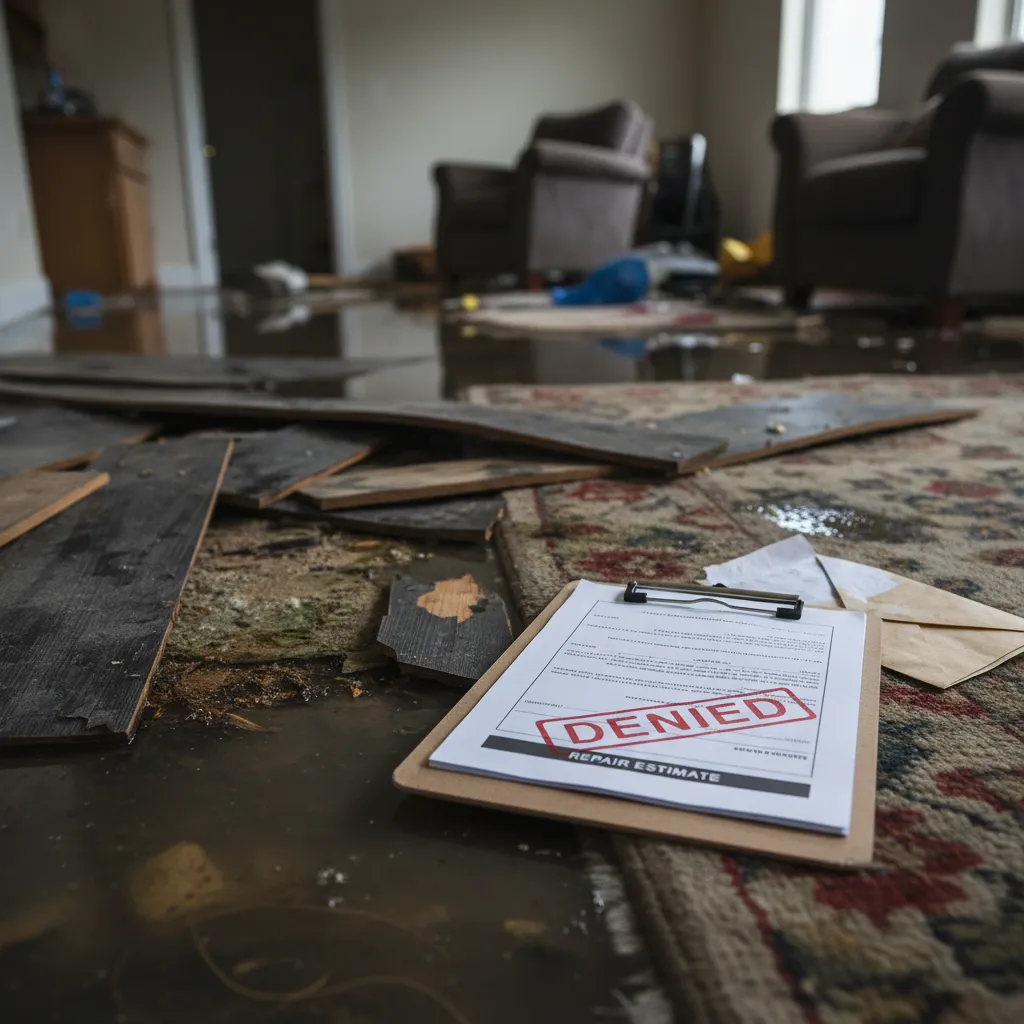
You wake up to the sound of running water. You step out of bed and your feet hit soggy carpet. A pipe burst in the wall, and now your living room is a lake. You do everything right: you shut off the main valve, you call a plumber, and you call your insurance company.
Then, three days later, the adjuster tells you: "Your claim is denied. This looks like a 'gradual' leak that was happening for a long time. Our policy only covers 'sudden and accidental' water discharge."
Just like that, you're looking at a $15,000 repair bill that you thought you were insured for.
Don't panic. A denial is not the final word. It's the beginning of a negotiation. Here is exactly how to fight a water damage denial and get your claim paid.
Step 1: Understand the "Sudden vs. Gradual" Trap
Insurance companies use the "gradual seepage" excuse for almost every water claim. They claim that if there is mold, or if the wood is rotted, the leak must have been happening for weeks or months, and therefore you "failed to maintain" the property.
The Counter-Argument: "Sudden" refers to the failure of the pipe, not the discovery of the water. A pipe can burst suddenly inside a wall where you can't see it. If it takes three days for the water to soak through the drywall, the damage might look "old," but the event was sudden and accidental.
Step 2: Get a Professional Opinion (That You Control)
The insurance adjuster is not a plumber or a structural engineer. They are a "claims professional" whose job is to save the company money.
You need your own experts:
- The Plumber's Report: Ask your plumber to write a detailed statement. "The copper pipe suffered a sudden longitudinal split due to pressure. There was no evidence of slow corrosion or prior patching." This is a huge piece of evidence.
- The Leak Detection Specialist: If the insurance company is still being difficult, hire a leak detection pro. They can use thermal imaging and moisture meters to prove where the water came from and how fast it spread.
- The Mold Inspector: If there is mold, have an inspector date it. Some types of mold can grow in as little as 24-48 hours. The presence of mold does not automatically mean the leak is old.
Step 3: Review Your Policy Language
Insurance policies are intentionally difficult to read, but they are contracts. You need to look for specific "endorsements."
- Seepage and Leakage Endorsement: Many policies have a specific "add-on" that covers gradual leaks up to a certain amount (like $5,000 or $10,000). The adjuster might "forget" to check if you have this.
- Sewer Backup: If the water came from a drain or toilet, it might be covered under a different section of the policy than a burst pipe.
Step 4: Send a Formal Demand for Reconsideration
If the adjuster tells you "no" on the phone, don't just hang up. Ask them to send the denial in writing, citing the specific policy exclusion they are using.
Once you have that, send a formal Demand Letter. This isn't just a "complaint"—it’s a legal notice that you are disputing their interpretation of the contract.
Hiring a lawyer to write this letter can cost $1,000 to $2,000. For a $15,000 claim, that’s a big chunk of your repair budget.
Instead, you can use howtowritea.com to generate a professional demand letter for $9 to $29. The letter cites your plumber's findings, includes photos of the damage, and correctly identifies the "sudden and accidental" nature of the loss. It demands a re-inspection by a senior adjuster within 14 days.
Step 5: Escalate to a Public Adjuster
If the insurance company is still "stonewalling" you, it might be time to bring in a Public Adjuster (PA). Unlike the insurance company's adjuster, a PA works only for you. They take a percentage of the settlement (usually 10-15%), but they often double or triple the final payout because they know how to find "hidden" damage that the company ignored.
Step 6: File a State Insurance Complaint
If the insurance company is acting in "bad faith"—meaning they are ignoring evidence, taking too long to respond, or misrepresenting your policy—file a complaint with your State's Department of Insurance.
The company is legally required to respond to these complaints within a strict timeframe. Often, the "Compliance Department" at the insurance company will overrule an adjuster just to avoid a black mark on their state record.
Common Tactics to Watch For
"You didn't have the heat on."
If a pipe froze and burst, they might claim you were "negligent" by not keeping the house warm enough. Prove you were home and the thermostat was set normally.
"It was 'flood' water, not 'plumbing' water."
Insurance covers water from the "top down" (rain through a roof, burst pipes). It usually does not cover water from the "ground up" (rising rivers, heavy rain entering through the foundation) unless you have separate Flood Insurance. Make sure your plumber confirms the water came from the plumbing system.
"The damage is just cosmetic."
Don't let them just pay for paint if the studs behind the wall are wet. Wet wood will rot and grow mold. Insist on "proper remediation," which includes industrial fans and dehumidifiers.
The Bottom Line
Water damage is a race against time. The longer the water sits, the worse the damage gets. But the insurance company often uses that "time" against you.
Document everything with photos and video. Get your own plumber's report. And if they deny you, use howtowritea.com to send a formal demand. Most "denials" are just a first offer. Don't accept it.