
Water Damage Claims: Public Adjusters vs. DIY Demand Letters
Water Damage Claims: Public Adjusters vs. DIY Demand Letters
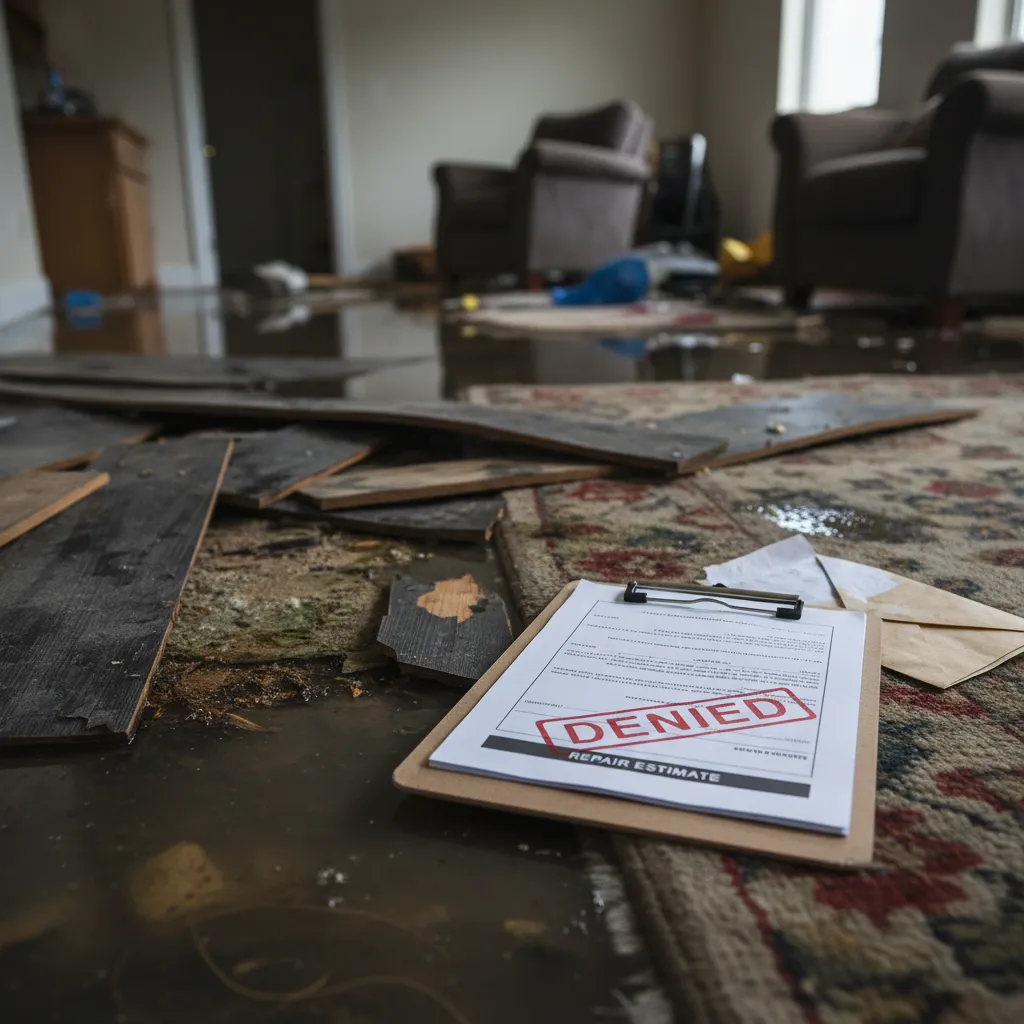
When your home has water damage, you are in a race against the clock. Mold starts growing in 48 hours. Wood starts warping in 72. But while you are rushing to save your home, your insurance company is often dragging its feet.
Worse yet, they might send a "preferred vendor" who tells you that your $20,000 restoration job can be fixed with a "deep cleaning" and two industrial fans for $1,500.
If you are facing a denial or a massive lowball offer for water damage, you have two primary ways to fight for a fair settlement. Here is how they compare.
Option 1: The Public Adjuster (PA)
Cost: 10% – 20% of the total settlement Approach: Full-service representation Speed: Slow (can add months to the process)
A Public Adjuster is a licensed professional who works only for you. They come to your house, do a "comprehensive" inspection (often finding damage the insurance company ignored), and handle all the negotiations with the insurer.
The Reality: PAs are very effective. They speak the insurance company’s language and they know how to maximize a claim. However, they are expensive. If your claim is $10,000, the PA will take $1,500 to $2,000 of that. If you need every penny to fix your house, that hurts.
The Risk: Many insurance adjusters "dig in their heels" when a PA is involved. It can turn a simple claim into a long, drawn-out battle. Also, once you sign a contract with a PA, you usually cannot fire them without paying their fee anyway.
Best for: Large, complex claims (over $30,000) involving structural damage or extensive mold.
Option 2: The Formal Demand Letter (DIY)
Cost: $9 – $29 Approach: Direct / Legal pressure Speed: Fast (7 to 14 days)
A formal demand letter is a written dispute of the insurance company's decision. Instead of "asking" them to reconsider, you are "demanding" a revised settlement based on evidence.
The Reality: Most insurance adjusters are overworked. They use "automated" software to generate lowball offers. When you send a formal letter that includes your own independent plumber's report and a detailed estimate from a restoration company, it forces a "manual" review.
Using a tool like howtowritea.com allows you to generate a professional demand letter that cites the "Sudden and Accidental" nature of the loss and the specific policy terms they are violating. You send it via USPS Certified Mail.
Why it works: A formal letter creating a "paper trail" is a prerequisite for a "Bad Faith" lawsuit. Insurance companies live in fear of Bad Faith claims because a judge can award the homeowner three times the value of the claim. When they see a professional demand letter, they often "find" extra money just to make the risk go away.
Best for: Denials based on "gradual seepage," lowball offers between $2,000 and $20,000, and claims where the insurance company is ignoring your plumber's report.
Comparison at a Glance
| Feature | Public Adjuster | howtowritea.com |
|---|---|---|
| Out-of-Pocket Cost | $0 (but 15% of total) | $9 - $29 |
| Effort Level | Low | Low (10 minutes) |
| Negotiation Level | Professional | Formal/Legal |
| Timeline | 1-3 Months | 2 Weeks |
| Retention of Funds | 85% of settlement | 100% of settlement |
The 3-Step "Water Damage" Recovery Plan
If your insurance company is lowballing your water claim, follow this sequence:
- Get Your Own Expert: Hire an independent plumber or restoration contractor to write an "Impact Report." Ask them to specifically address if the pipe failure was "sudden" and what "unseen" damage (like mold or rot) is likely present.
- Send the Demand: Use howtowritea.com to generate a formal Demand for Reconsideration. Include your expert's report and your own photos. Send it Certified Mail.
- The "Senior Review": In your letter, demand that the case be escalated to a "Senior Claims Adjuster" or a "Unit Manager." This bypasses the front-line adjuster who gave you the lowball offer.
Why You Shouldn't Wait
Water damage is progressive. If the insurance company "ghosts" you for two weeks while your floors are wet, they are actually causing more damage.
By sending a formal demand letter today, you are putting the liability for that extra damage on them. You are stating, in a legal record, that you are ready to fix the home and they are the only thing standing in the way.
Don't let them "starve" you into a bad settlement. Use the law to get the money you need to protect your biggest investment.