
Neighbor's Tree or Fence Causing Damage? How to Handle Liability
Neighbor's Tree or Fence Causing Damage? How to Handle Liability
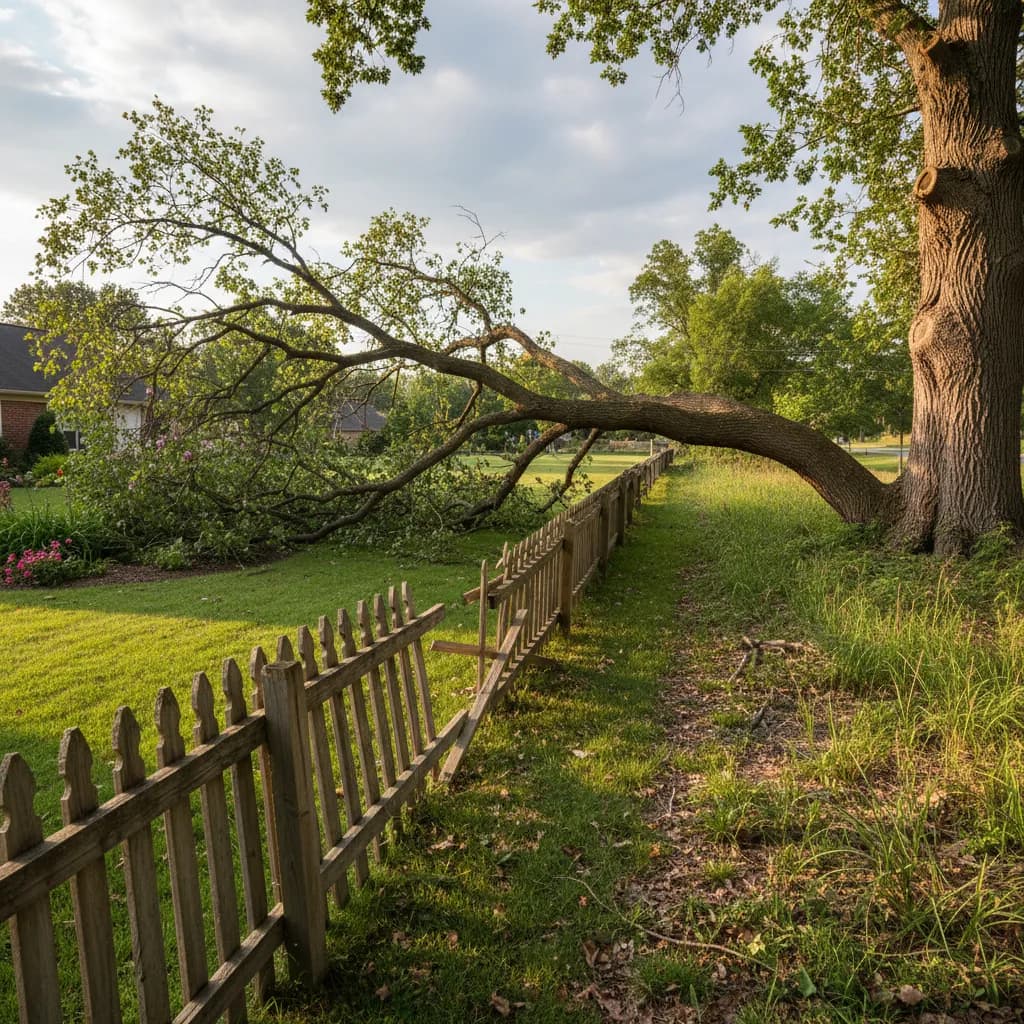
It starts with a storm. You're sitting in your living room, listening to the wind howl, when you hear a sickening "crack" followed by a heavy "thud." The next morning, you find a massive branch from your neighbor's ancient oak tree has crushed your backyard shed.
Or maybe it's less dramatic: your neighbor’s rotting wooden fence has finally given up the ghost and is leaning at a 45-degree angle over your flower beds.
Who pays for the cleanup? Who pays for the repairs? In the world of property law, the answer often depends on what happened before the storm. Here is the step-by-step guide to handling tree and fence liability with your neighbor.
The Rule of "Act of God" vs. "Negligence"
This is the most important distinction in property liability.
If a healthy tree falls during a hurricane or an unexpected storm, the law usually considers it an "Act of God." In most states, this means you are responsible for the damage to your property, and your insurance pays. It doesn't matter that it was your neighbor's tree.
However, if the tree was dead, diseased, or leaning dangerously—and you had previously warned your neighbor about it—that is "Negligence." If the neighbor knew (or should have known) the tree was a hazard and did nothing, they are liable for the damages.
This is why "The Warning" is so critical.
Step 1: Document the Hazard (Before it Falls)
If you're worried about a neighbor's tree or fence, don't just wait for it to break. Take photos of the rot, the dead branches, or the leaning posts. If a tree has no leaves in the summer or visible fungus on the trunk, it's a hazard.
You should also check your local ordinances. Many cities have "nuisance" laws that require property owners to remove dead trees or maintain fences that are in "dilapidated" condition.
Step 2: The Informal Request
Talk to your neighbor. "Hey Bob, I noticed that large branch over the garage looks pretty dead. I'm worried it might come down in the next storm. Could you have an arborist take a look at it?"
If Bob is a good neighbor, he'll handle it. If he ignores you, you need to create a "paper trail" of his negligence.
Step 3: Send a Formal "Notice of Hazard"
This is the most important legal step you can take. If the tree falls later, you need to prove the neighbor was on notice. A formal letter from howtowritea.com provides this proof.
Your letter should:
- Clearly identify the hazard (e.g., "The dead oak tree on the north side of your property").
- Mention the potential for damage to your property.
- Request that they have the tree inspected or the fence repaired within a specific timeframe (usually 14 days).
- State that this letter serves as formal notice of a hazardous condition, which will be used as evidence of negligence if damage occurs.
For $9 to $29, you can generate a professional letter that carries significantly more weight than a text message. Send it via Certified Mail. If that tree eventually hits your roof, you hand a copy of that letter and the Certified Mail receipt to your insurance company. They will use it to go after the neighbor's insurance for the full cost of repairs, saving you from paying your own deductible.
Step 4: The "Self-Help" Rule (Trimming)
In almost every state, you have the right to trim branches or roots that cross over your property line. This is called the "Self-Help" rule.
But there's a catch: You cannot trim the tree in a way that kills it or makes it unstable. If you hack off half a tree and it dies, you could be liable to the neighbor for the "replacement value" of a mature tree—which can be $10,000 to $50,000!
Always hire a professional arborist to do the trimming and make sure they stay on your side of the property line.
Step 5: Handling Fence Disputes
Fences are often "shared" property. In many states, "boundary fences" are the responsibility of both neighbors to maintain. If a fence on the property line is falling down, you can usually demand that the neighbor pay half the cost of the repair.
If the fence is entirely on their property, they are 100% responsible for its maintenance. If it's leaning onto your land or causing a safety hazard, use the formal demand letter process to require them to fix it.
The Bottom Line
When it comes to trees and fences, being "nice" is a great way to start, but being "documented" is the only way to protect your wallet. Don't wait for the storm to prove you were right. Use howtowritea.com to send a formal notice today.
It’s the difference between a $500 insurance deductible and a $0 payout because your neighbor’s negligence was caught on paper.